
Full Timetable
Last updated 26 August, 2026
Day One - Monday, 28 September
8:00 AM
Registration
8:30 am
Welcome & Warm-Up
- Wyatt Hall
Naomi Crellin
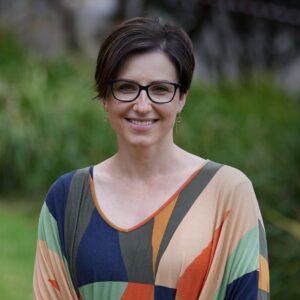
Naomi Crellin (alto, musical director The Idea of North) graduated with a Bachelor of Music in Jazz Voice from the Elder Conservatorium – University of Adelaide after beginning on classical piano. She has been a member of many choirs, orchestras and ensembles throughout her career. In addition, Naomi has studied a broad range of musical instruments including piano, cello and oboe.
She won the Young Australian Composer of the Year Award (1996) and Best Undergraduate Vocalist Award (2001) from the Elder Conservatorium of Music. Naomi has also studied classical, jazz and contemporary voice, conducting, piano and jazz ballet, and has taught piano, vocal, and choral students for many years. Educating vocalists of all ages and ability levels in the niche art of small group ensemble singing is her specialty and her passion.
After joining The Idea of North in early 2002, Naomi quickly became a significant contributor to the group’s repertoire through her writing and arranging and has also utilised her extensive choral training and experience in taking a major responsibility for managing the group’s musical affairs and educational activities.
During the Covid years Naomi obtained a Graduate Diploma of Counselling and now happily divides her time between counselling, singing, directing choirs, and writing. In 2024 Naomi started Nexus NDV, a high level harmony singing group for neurodivergent young adults. When she is not doing one of these many activities, Naomi can be found hiking, playing netball, attempting to keep her children off screens, or with a cat in her lap and her nose buried in a good novel.
8:45 am
Musicianship Level 1
Presented by:
- Graham Lange Centre - 3.1 & 3.2
Lucinda Geoghegan
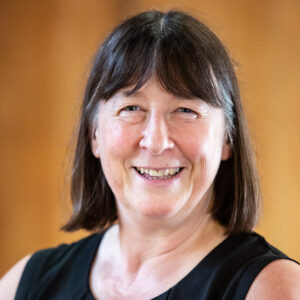
Lucinda Geoghegan graduated in music from the University of Edinburgh in 1982, completed a postgraduate teaching qualification at Moray House College of Education and trained with the Kodály Institute of Britain where she gained an Advanced Diploma in musicianship with Distinction. She worked as a secondary music teacher in Edinburgh before deciding to specialise in Primary and Early Years Music Education. She was also a theory and musicianship lecturer at the Royal Conservatoire of Scotland for 20 years.
Lucinda is currently Creative Learning Director for NYCOS and a regular tutor, and Chair of the Education Planning Board for the British Kodály Academy. She is also a board member of the International Kodály Society. Lucinda has a strong commitment to music education according to the Kodály concept and her work involves training in musicianship and methodology throughout UK. Further afield, she regularly delivers courses Australia, Asia, Europe, New Zealand and South Africa.
Publications written by Lucinda for NYCOS include – Singing Games and Rhymes series and with Christopher Bell she wrote the musicianship programme Go for Bronze, Go for Silver and Go for Gold, the latter being recognised by ABRSM.
9:30 am
Musicianship
Kate Tyson
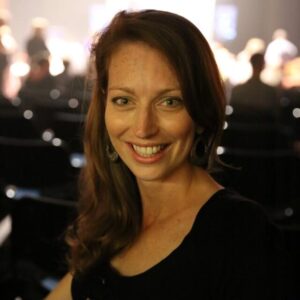
Kate Tyson (née Thompson) is a frequent guest clinician at conferences and workshops across Australia and the Asia-Pacific region. She has taught classroom music for almost two decades in both state and independent schools and is currently the Subject Coordinator for Music at Ambrose Treacy College in Brisbane, where she works across both the Primary and Secondary schools.
Kate has a passion for community singing and has conducted numerous choirs in both Canada and Australia, including the Voices of Birralee. She is a Past President of Kodály Queensland and has contributed to Kodály teacher education programs in Queensland, New South Wales, South Australia, Western Australia, New Zealand and Malaysia. Most recently, she was the Middle Years presenter at Independent Schools Queensland’s Harmonise & Innovate Conference, and her work with Years 5 and 6 is currently featured in an education filming project developing resources for teacher professional learning. In 2026, she was nominated for an EREA Charter Leadership Award.
Kate is known for delivering practical, high-energy professional learning that equips teachers with creative, immediately applicable strategies for the music classroom.
Dr Jason Goopy
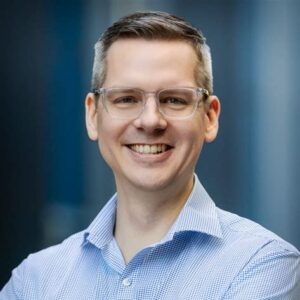
Dr Jason Goopy is a Senior Lecturer in Music Education at Edith Cowan University and a Fulbright Scholar. He lectures and coordinates secondary and instrumental music education for the School of Education and the Western Australian Academy of Performing Arts (WAAPA). Drawing on two decades of teaching music in studio, school, tertiary, and community settings, he is recognised for creating flourishing music learning programs.
Jason’s research examines how music education positively transforms lives at the intersection of music, education, and psychology using creative arts-based and mixed-method approaches. He focuses on how intentional music engagement and learning enhance young people’s wellbeing and how their educators can be supported. As a 2025-26 Fulbright Postdoctoral Scholar hosted by Teachers College, Columbia University, Jason investigated how learning music in New York City supports the wellbeing of young people experiencing adversity.
With a longstanding commitment to service leadership, Jason has been recognised with a Fellowship of the Australian Society for Music Education (FASME). He is the Immediate Past President of ASME and Kodály Australia, a member of the National Advocates for Arts Education, and an Advisory Group Member for the national initiatives, Music Education: Right from the Start and Australian Youth Orchestra’s Music in Me.
Dr James Cuskelly
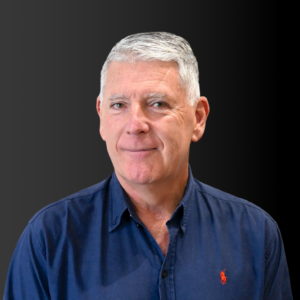
Dr James Cuskelly has a broad base in education, having taught in pre-school, primary and secondary classrooms as well as serving as Head of Music Education and Aural Studies at The University of Queensland, 2000 – 2009. His passion for music, and his ability to enthuse and bring about effective learning in students across all ages or abilities, is internationally recognized. James is committed to teacher training in music education, and consequently, is frequently asked to lead teacher in-service programs and workshops. He runs a variety of accredited teacher training programs both in Australia and internationally. Dr Cuskelly was awarded the Medal of the Order of Australia (OAM) for service to music education in The Queen’s Birthday 2018 Honours List.
Dr Árpád Tóth
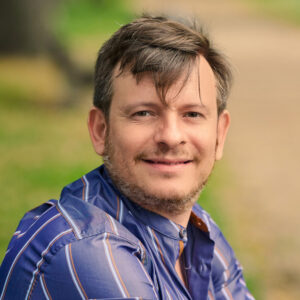
Dr. Árpád Tóth is a worldwide sought-after music educator, choral conductor, artistic director of several festivals, and a community leader. He believes passionately in the strength of human diversity, the power of music making, and in art education. He is well-known in Hungary because he is the founding leader of Hungary’s largest community choir, Csíkszerda, and the internationally well-known festival franchise, Night of Choirs. He leads the most successful educational program, “Hangadó” in the Hungarian Music House and currently teaches music educational subjects in a Hungarian minority University in Oradea, Romania (Partium). His international career has led him on a yearly basis for more than 15 countries in four continents: Australia, Asia, Europe, and North America. Some of his public speeches went viral, as he speaks about his firm belief: Singing belongs to everyone.
Early Years Pedagogy
Presented by:
- Graham Lange Centre - 3.1 & 3.2
Lucinda Geoghegan
Lucinda Geoghegan graduated in music from the University of Edinburgh in 1982, completed a postgraduate teaching qualification at Moray House College of Education and trained with the Kodály Institute of Britain where she gained an Advanced Diploma in musicianship with Distinction. She worked as a secondary music teacher in Edinburgh before deciding to specialise in Primary and Early Years Music Education. She was also a theory and musicianship lecturer at the Royal Conservatoire of Scotland for 20 years.
Lucinda is currently Creative Learning Director for NYCOS and a regular tutor, and Chair of the Education Planning Board for the British Kodály Academy. She is also a board member of the International Kodály Society. Lucinda has a strong commitment to music education according to the Kodály concept and her work involves training in musicianship and methodology throughout UK. Further afield, she regularly delivers courses Australia, Asia, Europe, New Zealand and South Africa.
Publications written by Lucinda for NYCOS include – Singing Games and Rhymes series and with Christopher Bell she wrote the musicianship programme Go for Bronze, Go for Silver and Go for Gold, the latter being recognised by ABRSM.
11:00 am
Pedagogy
Lower Primary Pedagogy
Presented by:
- Graham Lange Centre - 2.1 & 2.2
Dr James Cuskelly
Dr James Cuskelly has a broad base in education, having taught in pre-school, primary and secondary classrooms as well as serving as Head of Music Education and Aural Studies at The University of Queensland, 2000 – 2009. His passion for music, and his ability to enthuse and bring about effective learning in students across all ages or abilities, is internationally recognized. James is committed to teacher training in music education, and consequently, is frequently asked to lead teacher in-service programs and workshops. He runs a variety of accredited teacher training programs both in Australia and internationally. Dr Cuskelly was awarded the Medal of the Order of Australia (OAM) for service to music education in The Queen’s Birthday 2018 Honours List.
Kate Tyson
Kate Tyson (née Thompson) is a frequent guest clinician at conferences and workshops across Australia and the Asia-Pacific region. She has taught classroom music for almost two decades in both state and independent schools and is currently the Subject Coordinator for Music at Ambrose Treacy College in Brisbane, where she works across both the Primary and Secondary schools.
Kate has a passion for community singing and has conducted numerous choirs in both Canada and Australia, including the Voices of Birralee. She is a Past President of Kodály Queensland and has contributed to Kodály teacher education programs in Queensland, New South Wales, South Australia, Western Australia, New Zealand and Malaysia. Most recently, she was the Middle Years presenter at Independent Schools Queensland’s Harmonise & Innovate Conference, and her work with Years 5 and 6 is currently featured in an education filming project developing resources for teacher professional learning. In 2026, she was nominated for an EREA Charter Leadership Award.
Kate is known for delivering practical, high-energy professional learning that equips teachers with creative, immediately applicable strategies for the music classroom.
Dr Jason Goopy
Dr Jason Goopy is a Senior Lecturer in Music Education at Edith Cowan University and a Fulbright Scholar. He lectures and coordinates secondary and instrumental music education for the School of Education and the Western Australian Academy of Performing Arts (WAAPA). Drawing on two decades of teaching music in studio, school, tertiary, and community settings, he is recognised for creating flourishing music learning programs.
Jason’s research examines how music education positively transforms lives at the intersection of music, education, and psychology using creative arts-based and mixed-method approaches. He focuses on how intentional music engagement and learning enhance young people’s wellbeing and how their educators can be supported. As a 2025-26 Fulbright Postdoctoral Scholar hosted by Teachers College, Columbia University, Jason investigated how learning music in New York City supports the wellbeing of young people experiencing adversity.
With a longstanding commitment to service leadership, Jason has been recognised with a Fellowship of the Australian Society for Music Education (FASME). He is the Immediate Past President of ASME and Kodály Australia, a member of the National Advocates for Arts Education, and an Advisory Group Member for the national initiatives, Music Education: Right from the Start and Australian Youth Orchestra’s Music in Me.
Choral and Conducting Pedagogy
Presented by:
- Graham Lange Centre - 3.5 & 3.6
Dr Árpád Tóth
Dr. Árpád Tóth is a worldwide sought-after music educator, choral conductor, artistic director of several festivals, and a community leader. He believes passionately in the strength of human diversity, the power of music making, and in art education. He is well-known in Hungary because he is the founding leader of Hungary’s largest community choir, Csíkszerda, and the internationally well-known festival franchise, Night of Choirs. He leads the most successful educational program, “Hangadó” in the Hungarian Music House and currently teaches music educational subjects in a Hungarian minority University in Oradea, Romania (Partium). His international career has led him on a yearly basis for more than 15 countries in four continents: Australia, Asia, Europe, and North America. Some of his public speeches went viral, as he speaks about his firm belief: Singing belongs to everyone.
Older “Beginners”?
Presented by:
- Nicholls Building - Band Room
- Workshop
“All ’round the brickyard, remember me” would be familiar to almost all of us here — a staple for opening the first lesson with a new secondary class. But what does this opening assume about our students? How might it feel to be positioned as a ‘beginner’ again at the very moment when students are negotiating identity, competence, and belonging? What messages do our opening musical gestures send about whose musical knowledge counts?
What if the first music lesson did not begin with what we recognise as foundational, but with what students bring? What if students’ prior musical learning — formal, informal, cultural, or self-taught — were treated not as peripheral, but as legitimate musical capital from the outset? How might this shift students’ sense of agency, confidence, and value as musicians?
In this practical workshop, we unpack how staff at Brisbane Girls Grammar School approach music learning in Year 7 (the first year of secondary school) with students from highly divergent musical backgrounds. The session examines strategies for designing inclusive, joyful, and musically rigorous experiences that meet students where they are, while still establishing shared musical foundations for future learning. At each stage, keeping the student experience central to teaching and learning.
Rather than offering a universal solution, this session presents one possible response to a persistent question: what do the first musical moments in secondary school tell students about who music is for? Participants are invited to reflect on how starting differently might challenge entrenched assumptions, deepen engagement, and support more students to see themselves as musicians.
Michael McGrath
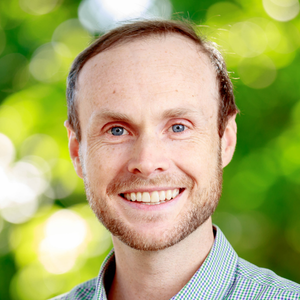
Michael McGrath is Head of Curriculum Music at Brisbane Girls Grammar School. He draws on Kodály-inspired, aural-vocal pedagogy to develop student-centred curriculum that embraces a broad range of musical styles with popular music central to teaching and learning. Michael has led collaborative composing projects with professional ensembles including Topology, Rue Arts, and Nonsemble, and has a particular interested in using recording technology to enrich musical learning, creativity, and musicianship.
Ally Dunk
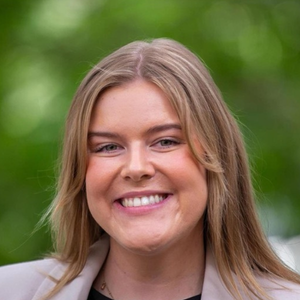
Ally Dunk is a Curriculum Music Teacher at Brisbane Girls Grammar School, where she teaches within a Kodály-inspired music program. With experience across both primary and secondary contexts, she designs engaging music learning experiences that develop musicianship, creativity, and confidence. Ally is also an active choral conductor and composer, and enjoys sharing her musical passions with her students.
11:55 AM
Move to Next Session
12:00 pm
Elective Sessions
- Click each heading to read about the session!
Music-making and creativity in the Middle and Upper Primary Years
Presented by:
- Graham Lange Centre - 2.5 & 2.6
- Workshop
Making music and creativity sits at the heart of an authentic and engaging music education. This session will explore how we take foundational musical elements and scaffold the learning to a level where students can thrive, as they develop their own musical independence and creative approach to music-making. With a focus on the Middle and Upper Primary years, we will sing, move, create and improvise with succinct, accessible and sequential learning activities that are immediately transferrable back into your own creative music-making environment.
Ruth Friend
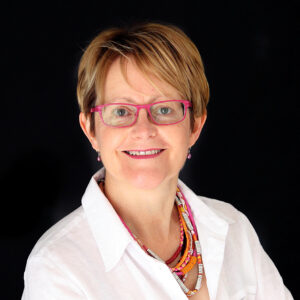
Ruth is an experienced teacher and facilitator in training teachers with over 40 years in the music classroom. She has broad teaching expertise from pre-school through tertiary and adult education which encompasses music and movement, instrumental and choral programs. Ruth is a Kodaly Australia course lecturer and is currently serving as Kodaly VIC President. Ruth passionately supports teachers and provides 1:1 mentor sessions and group professional learning along with free online videos to assist in maximising teaching effectiveness. She is the author of Put the Beat in ya Feet for flute and co-author of the successful Take Note Music books and interactive resources for the primary music classroom.
Davina McClure
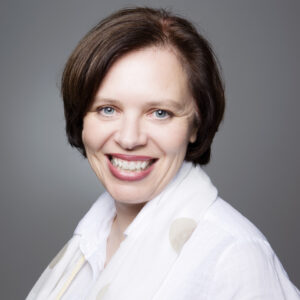
Davina’s widespread experience in education has extended across the areas of K-12 classroom music instruction and whole school teaching, learning and operations. As the Deputy Principal at Camberwell Girls Grammar School, she currently balances classroom music teaching with strategic leadership of staff and students, which she thoroughly enjoys! Davina has a special interest in children’s choirs and has conducted the Preparatory Choir of The Young Voices of Melbourne. She has presented at both State and National music conferences in Kodaly and Orff and is the co-author of Take Note Music books and interactive resources for the primary music classroom.
Presented by:
- Graham Lange Centre - 2.5 & 2.6
- Workshop
Sing, Move, Thrive: A Kodály Journey Informed by the Science of Learning
Presented by:
- Wyatt Hall
- Workshop
This interactive workshop explores the strong alignment between the Kodály approach to music education and contemporary cognitive science, particularly research associated with the Science of Learning. Drawing on principles such as cognitive load theory, retrieval practice, daily review, and checking for understanding, the session positions Kodály pedagogy not only as philosophically rich, but as deeply evidence-aligned and instructionally robust.
Participants will engage in practical, music-making experiences that model how core Kodály principles — sequential learning, singing as the foundation, inner hearing, movement, and active engagement — naturally support effective learning by managing cognitive load, strengthening long-term memory, and promoting deep conceptual understanding. Through guided activities, delegates will experience how retrieval practice and spaced review are embedded within everyday Kodály-inspired routines, and how these practices enhance musical fluency and transfer.
The workshop will explicitly connect Kodály pedagogy with recognised High-Impact Teaching Practices, including explicit teaching, formative assessment, feedback, and checks for understanding. Participants will be invited to critically reflect on their own teaching contexts and consider how intentional lesson design, repertoire choice, and classroom routines can better align with both Kodály philosophy and current research on how students learn.
Designed for primary and secondary music educators, the session balances theory with hands-on application, providing concrete strategies that participants can immediately implement in their classrooms. By the end of the workshop, delegates will leave with a clearer understanding of how Kodály-inspired practice aligns with cognitive science, and renewed confidence in advocating for music education as both artistically rich and pedagogically rigorous.
Joel Copeland
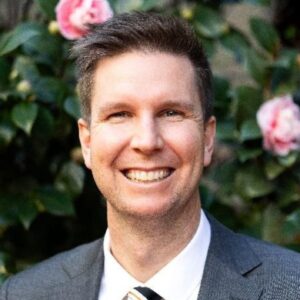
Joel Copeland is a passionate and accomplished educational leader with a strong foundation in the arts and a commitment to equity and excellence in education. As Principal of the ACT Instrumental Music Program, Joel leads system-wide strategies that create inclusive and high-quality opportunities for students across the territory. A nationally certified Lead Teacher, HALT assessor, and lecturer in the Australian Kodály Certificate, he brings deep expertise in curriculum, pedagogy, and leadership to support both student achievement and teacher growth.
Presented by:
- Wyatt Hall
- Workshop
Scaffolded, Not Scary – Music Analysis
Presented by:
- Graham Lange Centre - 2.1 & 2.2
- Workshop
Kodály’s principals in musicianship of going from the known to the unknown and highly scaffolding knowledge then gradually giving students greater agency can also be applied to music analysis. Written analysis is often scary, and I have taught students who are paralysed with fear in case they write down something that is ‘wrong’. With that in mind, this workshop will run through some of the exercises I use to give students more confidence in musical analysis in a seamless way – almost as if they don’t realise they’re learning!
Jennifer Gillan
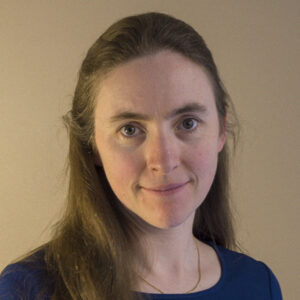
Jenny Gillan has taught at the Victorian College of the Arts Secondary School in Melbourne since 2007. She taught in London and studied at the Kodály Institute (Hungary), majoring in Advanced Conducting. She holds a Master of Music Studies (UQ). Jenny has taught musicianship and music analysis at all levels of education and has conducted many choirs. She is an experienced examiner and guest lecturer who has presented at many national and international conferences. Jenny has written the textbooks – “Listening Beyond Hearing” (music analysis) and “Progressive Musicianship 1 and 2” (musicianship). She enjoys writing challenging games and songs for her students.
Presented by:
- Graham Lange Centre - 2.1 & 2.2
- Workshop
Sing It. Clap It. Learn It: Sequential Clapping Games for Primary Classrooms
Presented by:
- Graham Lange Centre - 3.1 & 3.2
- Workshop
Clapping games are a powerful and joyful way to help children sing, move, and thrive.
In this highly practical session, Deb Brydon and Debbie O’Shea will lead participants through a carefully sequenced collection of developmentally appropriate clapping games for the primary years, grounded in Kodály-inspired pedagogy.
Participants will sing, move, and play a range of traditional and contemporary repertoire that supports the development of steady beat, rhythm, pitch, coordination, memory, and musical independence. Each game will be unpacked to show why it works, when to use it, and how it supports musical learning over time.
The session will explicitly link each activity to the Australian Curriculum: Music, demonstrating how clapping games support curriculum outcomes through active music-making, movement, and aural learning. Practical teaching tips, differentiation ideas, and classroom management strategies will be shared throughout.
Participants will receive ready-to-use handouts including repertoire lists, teaching notes, and curriculum links, ensuring every idea can be implemented immediately in their own classroom.
Whether you are new to clapping games or looking to deepen your repertoire and sequencing, this session will leave you energised, inspired, and equipped with practical tools to use the very next day.
Deb Brydon
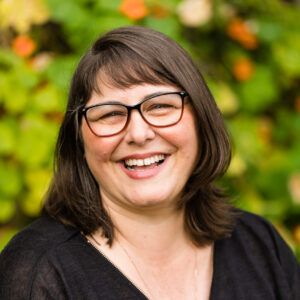
Deb Brydon is a primary music specialist with over 30 years’ experience. A Highly Accomplished Teacher, she has coordinated Kodály QLD DVD projects (Musical Beginnings, Middle Years Music Education and Step Up). Deb has served on the Kodály QLD committee for 20+ years and lives in Magan-djin (Brisbane).
Debbie O’Shea
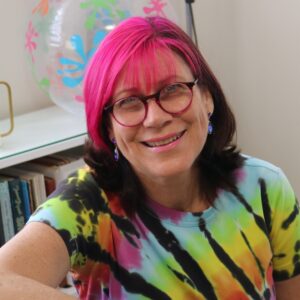
Debbie is an eternal optimist with a passion for Music Education. With a Master’s degree and 40+ years in classrooms, she believes every child deserves quality music learning. Through Crescendo Music Education and her podcast, she supports educators everywhere. Her debut book, The Stalagmite Effect, was published in 2025.
Presented by:
- Graham Lange Centre - 3.1 & 3.2
- Workshop
From Voice to Instrument: Supporting Boys to Flourish Through a Kodály-Inspired Primary Music Immersion Program
Presented by:
- Nicholls Building - Music Room
- Paper Presentation
The benefits of learning music, particularly through singing and instrumental study, have been documented over the past decade. Drawing on research, this paper and workshop explore a Kodály-inspired Year 5 music immersion program that places the voice at the centre of learning an instrument. Designed within a boys’ school context, the program intentionally supports student wellbeing and flourishing which is aligned with the PERMA framework.
This paper examines the successful implementation of a Year 5 immersion program outlining the processes that have been refined to ensure the longevity of a vocal/aural program. Focus is given to strategies that have fostered strong support from school leadership, respect and engagement from students, and meaningful partnerships with families.
The program’s Kodály-inspired, voice-first, aural-based approach provides a sequential pathway from group singing and musicianship games to ensemble performances. Gamification elements, particularly a badge leveling system, allows the boys to flourish and allows them to strive for self-excellence. Using the Gia timbre preference testing, shows how students are allocated instruments.
Inclusion is central to the program’s design. Individual Education Plans are considered during instrument allocation, alongside student-to-teacher ratios that support individual development. ICTs are integrated through music software and augmented reality experiences to enhance learning. Group singing and singing games provide an inclusive entry point for all students, enabling boys to develop aural skills, confidence, and musical identity before transitioning to instruments.
Ultimately, the program aims to shift the culture of the College by normalising music making and singing within a boys’ school where sport is often prioritised. The session concludes by following one student’s journey from Year 5 immersion to participation in the Australian Honours Ensemble Program, illustrating how a voice-first, inclusive approach can support diverse musical pathways and long-term flourishing.
Belinda Dolan
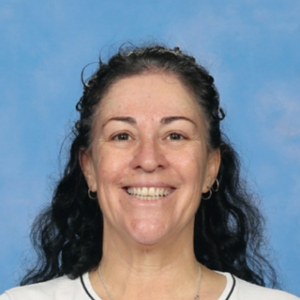
Belinda is coordinator of curriculum music at St Joseph’s Nudgee College. She enjoys teaching in the middle phase of education and has an interest in instrumental immersion and using technology to support learning in the music classroom. At Nudgee College Belinda teaches year 5 – 7 music.
Sam Smith
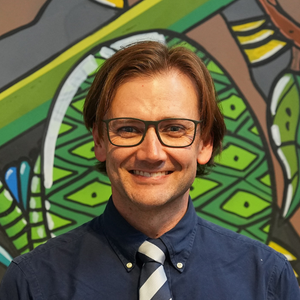
Sam holds the role of Director of Performing Arts at St Joseph’s Nudgee College, Brisbane. In this position, he oversees the co-curricular Performing Arts activities at the College. Sam holds Bachelor and Postgraduate degrees from Griffith University and completed his Master of Education at Queensland University of Technology in 2019.
Presented by:
- Nicholls Building - Music Room
- Paper Presentation
Sounds of Silence: (Un)noticing songwriting in Queensland schools
Presented by:
- Nicholls Building - Music Room
- Paper Presentation
Queensland’s senior secondary composition assessment makes some songwriting practices easy to recognise and others harder to name. For Kodály practitioners and researchers alike, a useful way into that problem is musical literacies: the difference between what students can do musically and what they can say about what they can do. When assessment language rewards explanation, classification and pinpointing, some songwriting moves are harder to credit because they do not translate neatly into atomised descriptors.
I address this by re-reading songwriting assessment as boundary-making work: what counts as ‘composition’, what becomes sayable about recorded work, and what teachers learn to reward. In Rita Irwin’s terms, the paper proceeds a/r/tographically, reading from inside an entangled field of practice as songwriter, teacher and researcher. Working with an assemblage of curriculum documents, task sheets, marking guides, recordings, drafts, classroom talk and reflexive practice journalling, I look for patterns of legibility: which literacies are repeatedly foregrounded in judgements and feedback, and which are quietened or made secondary. Adult co-writing is not employed as a model for students, but as a diagnostic device that makes the system easier to read.
Three outcomes follow. First, composing emerges as a naming economy that blurs tools, objects and audible results, which matters when the composing artefact is a recording rather than a score. Second, unity and cohesion are high-stakes yet under-specified, so teachers and students often lean on inherited heuristics rather than shared language for track-level coherence. Third, assessment privileges retrospective justification and atomistic pinpointing, elevating literacies of explanation over the situated labour of track-making. The paper closes by proposing more usable ways of describing composition as track-making praxis, legitimising recordings as composing artefacts, and re-orienting judgement toward holistic decisions about how tracks communicate meaning to listeners.
Andrew Pennay
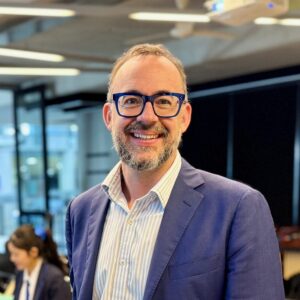
Andrew Pennay is Director of Creative Futures at Brisbane Girls Grammar School, where he coordinates the creative arts curriculum, supports teacher learning and contributes to schoolwide approaches to pedagogy. His work with Project Zero, particularly Cultures of Thinking and Pedagogies of Play, has taken him from Brisbane to Perth and Manila, working with teachers to ignite music learning in aural-vocal secondary contexts. Andrew is also a PhD candidate at Queensland University of Technology, researching secondary school songwriting through performative, post-qualitative and a/r/tographic approaches. A recipient of the 2025 ACEL New Voice in School Leadership award, he is passionate about arts education, teacher agency and the conditions that allow learning to become deeper, more playful and more creative.`
Presented by:
- Nicholls Building - Music Room
- Paper Presentation
Australian Girls Choir
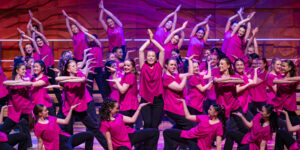
The Australian Girls Choir has developed a reputation for inspirational performances to audiences around the world, through national and international tours, television appearances, and thousands of public events. Founded in 1984, the AGC now has 6,000 choristers in training in Adelaide, Brisbane, Canberra, Melbourne, Perth and Sydney. The founding philosophy of the AGC is that all girls can learn to sing with encouragement and training and the choir’s developmental classroom teaching is built on a strong foundation of Kodály-based music education.
Regularly seen at major events from the cricket to the Australian Open and much loved at Carols by Candlelight and Carols in the Domain, the choir is perhaps best known for its advertising campaigns for Qantas over the last 28 years. The AGC has shared the stage with a long list of professional artists including the Melbourne Symphony Orchestra, André Rieu, Celtic Woman and Hugh Jackman, and has been honoured to perform for Queen Elizabeth II, Nelson Mandela, President Obama and the Dalai Lama.
1:50 pm
Dr Árpád Tóth
Dr. Árpád Tóth is a worldwide sought-after music educator, choral conductor, artistic director of several festivals, and a community leader. He believes passionately in the strength of human diversity, the power of music making, and in art education. He is well-known in Hungary because he is the founding leader of Hungary’s largest community choir, Csíkszerda, and the internationally well-known festival franchise, Night of Choirs. He leads the most successful educational program, “Hangadó” in the Hungarian Music House and currently teaches music educational subjects in a Hungarian minority University in Oradea, Romania (Partium). His international career has led him on a yearly basis for more than 15 countries in four continents: Australia, Asia, Europe, and North America. Some of his public speeches went viral, as he speaks about his firm belief: Singing belongs to everyone.
2:30 pm
Exploring Children’s Vocal Development through Asian Folk Songs within the Kodály-inspired Approaches
Presented by:
- Nicholls Building - Band Room
- Workshop
In this study, the researcher examined and implemented a selection of folk songs from Asian countries—including Korea, Japan, and China—as instructional materials in general music classrooms, integrating Kodály techniques such as movable-do solfège and hand signs to enhance children’s pitch awareness.
The participants consisted of 308 randomly selected fourth-grade students, aged 9–10, from six local elementary schools in Taiwan. Data collection involved two components: teachers’ portfolio assessments and a student competence test. The portfolio assessments included instructional materials and reflective reports, while the competence test comprised a Reading Test and a Matching Test, with items derived from teachers’ instructional content and standard music textbooks.
Findings indicated that the experimental group, which engaged with Asian folk songs, demonstrated greater interest, and superior performance on the competence test compared to the control group, which relied on traditional teaching methods and achieved less satisfactory outcomes. Considering children’s vocal development, melodic intervals for singing should begin with smaller ranges and gradually expand. Intervals such as the major second and minor third are particularly appropriate for young singers. Moreover, descending minor thirds and descending perfect fourths were identified as the easiest intervals for children aged 8–10 to sing accurately (Moore, 1995).
Analysis of the folk songs revealed that many are structured around scales rich in minor thirds and perfect fourths, which correspond well with children’s vocal development. These intervals are therefore highly suitable for early music education. The study’s conclusions highlight three key points:
- Incorporating traditional Asian folk songs into music classes effectively captures students’ interest and attention, thereby fostering pitch awareness.
- This instructional approach, particularly the use of hand signs during singing, motivates students and makes music learning more engaging and inspiring.
- Teaching with folk songs contributes to the preservation and promotion of cultural heritage on a global scale.
Dr Dennis Ping-Cheng Wang
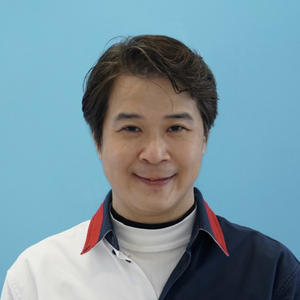
Dr. Dennis Wang is an associate professor in music education at Faculty of Education, University of Macau. He won his Doctor of Musical Arts Degree from the University of Miami, USA. He is an active music researcher and has written several books and presented research at international conferences and journals.
3:45 pm
Elective Sessions
- Click each heading to read about the session!
Presented by:
- Nicholls Building - Band Room
- Workshop
Musical Explorers: Beyond “How do I feel about this?” to Thoughtful Musicianship
Presented by:
- Graham Lange Centre - 2.5 & 2.6
- Workshop
This engaging workshop offers musically rich, Kodály inspired teaching and learning sequences that illustrate possible approaches to the Exploring and Responding strand of the Australian Curriculum: The Arts: Music v9. Participants will engage in activities in which learners respond through singing, movement, listening, analysis, and creativity. The session will also investigate ways to develop the whole child by strengthening cross curricular connections with HASS and Science inquiry units and by providing a variety of props such as stretchy bands, scarves, parachutes and puppets.
Designed for both specialist and generalist primary teachers, the workshop includes activities for students from Years 1–6. Although the session will include ways to promote individual student agency, participants will explore the ways in which Exploring and Responding can go beyond expressing personal preference – rather it is active music making and thinking that develops music literacy, critical listening, open heartedness and awareness of the importance of music in students’ lives and communities. The workshop will also explore ways to approach assessing student achievement in this strand.
Participants will leave with classroom ready strategies and resources that support learners of all ages to explore and respond with musical understanding as genuine musicians.
Kylie Van Dijk
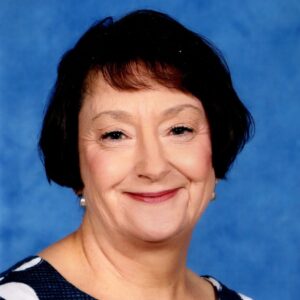
Kylie Van Dijk is an experienced music educator. At Trinity Christian School, she teaches Years 1–6, directs choirs, and presents major school events. She holds a Bachelor of Music (Hons), a Master of Teaching (Primary), and an Australian Certificate in Kodály Music Education. Kylie is passionate about blending explicit instruction with inquiry learning to encourage creativity, curiosity, and meaningful musical connections. She has presented widely for Kodály ACT, national conferences, universities, and independent schools, and currently serves as President of Kodály ACT. She is also Associate Conductor of The Resonants and plays piano for her local Anglican church.
Presented by:
- Graham Lange Centre - 2.5 & 2.6
- Workshop
Let’s Twist (Again): Four reflexive moves through one song
Presented by:
- Wyatt Hall
- Workshop
This workshop uses Let’s Twist Again as a friendly starter song, then quickly opens out into a bigger question: what happens when we treat singing and dancing as ways of thinking, not just ways of delivering content? We will sing, move, speak-rhythm and play with groove, then pause to notice what those actions do to attention, confidence, belonging, and musical decision-making. The point is not to teach ‘the song’, but to use one shared experience to ask: what other songs might do this work? What other pathways might we open when a class needs more social glue, more musical risk-taking, or a different kind of ‘success’?
Drawing on the same tune, we then move through four reflexive moves as a practical prompt for re-thinking what we already do as teachers. Echoing asks what we inherit in our repertoire choices and routines. Shaping asks what we reward, repeat, or quietly ignore. Connecting asks how learning travels through other people, spaces and small rehearsal rituals. Transforming asks what a ‘small twist’ looks like when constraints stay in place, but our conceptualisation shifts. Participants leave with a short, adaptable sequence they can apply to many songs, and a set of prompts for re-reading planning, assessment, and cultural habits in our classrooms.
Andrew Pennay
Andrew Pennay is Director of Creative Futures at Brisbane Girls Grammar School, where he coordinates the creative arts curriculum, supports teacher learning and contributes to schoolwide approaches to pedagogy. His work with Project Zero, particularly Cultures of Thinking and Pedagogies of Play, has taken him from Brisbane to Perth and Manila, working with teachers to ignite music learning in aural-vocal secondary contexts. Andrew is also a PhD candidate at Queensland University of Technology, researching secondary school songwriting through performative, post-qualitative and a/r/tographic approaches. A recipient of the 2025 ACEL New Voice in School Leadership award, he is passionate about arts education, teacher agency and the conditions that allow learning to become deeper, more playful and more creative.`
Presented by:
- Wyatt Hall
- Workshop
Songs and Games for Older Students
Presented by:
- Graham Lange Centre - 2.1 & 2.2
- Workshop
Students need to move! At the Secondary level, they often go from sitting still for an hour in one classroom to sitting still for an hour in another. Music classes can counter this. In this workshop I will teach you some games and songs that I do with my students at the Secondary level. These games are also appropriate for upper secondary school.
Jennifer Gillan
Jenny Gillan has taught at the Victorian College of the Arts Secondary School in Melbourne since 2007. She taught in London and studied at the Kodály Institute (Hungary), majoring in Advanced Conducting. She holds a Master of Music Studies (UQ). Jenny has taught musicianship and music analysis at all levels of education and has conducted many choirs. She is an experienced examiner and guest lecturer who has presented at many national and international conferences. Jenny has written the textbooks – “Listening Beyond Hearing” (music analysis) and “Progressive Musicianship 1 and 2” (musicianship). She enjoys writing challenging games and songs for her students.
Presented by:
- Graham Lange Centre - 2.1 & 2.2
- Workshop
Big Music for Little People
Presented by:
- Graham Lange Centre - 3.1 & 3.2
- Workshop
Art music in the early years classroom
In this workshop Sarah will demonstrate the various ways classical and classical-folk pieces can be incorporated in early years music lessons.
We will unpack the importance of thoughtfulness when choosing repertoire, model real-life activities that can be immediately used in your lessons and how to design age-appropriate art music activities for lessons.
The workshop could also include – reasons to choose or avoid certain recordings, and illustrate practices for transitions to classical music focus’ in lessons.
Sarah Muchall

Sarah is a highly experienced classroom music specialist and choral conductor who teaches K-6 at Brisbane Boys College and Somerville House. Over the last 20 years she has worked as a conductor/workshop leader/guest instructor with primary and secondary school choirs, combined school and festival choirs, community choirs and professional vocal groups. Her international teaching experience ranges from infants to high school students, yet her heart has always been with the youngest music students.
The Journey Towards Thriving: Adolescent Girls During Voice Change
Presented by:
- Nicholls Building - Music Room
- Paper Presentation
AIM: Singing is an essential foundation for Kodály-inspired music teaching and creative expression. Music teachers and choral conductors who work with adolescent girls during female adolescent voice change (FAVC) need to be equipped to understand and support their singers with sensitivity to the private struggles some singers experience during FAVC.
OUTCOME: This paper will describe female adolescent voice change (FAVC), and provide an awareness of the vocal characteristics of FAVC and the associated psychological effects as experienced during peak change, usually 12-14 years. Exercises and strategies to support affected girls will be discussed.
SIGNIFICANCE: The voice of a young girl is markedly different to that of a mature woman, yet the physiological changes producing these timbral change are under-acknowledged and poorly understood in our society. Voice change in boys on the other hand is well recognised and celebrated as a coming of age.
The literature of singing voice indicates that adolescent girls undergoing peak voice change frequently experience breathiness, discomfort, loss of core tone, and loss of vocal strength while singing. Despite being a normal process, some voices can become clinically dysphonic. Adding to the difficulties, the changes are likely to be felt much more keenly by the girls themselves than is obvious to the casual observer.
For too long, this period has been characterised as girls being ‘unwilling to sing out’ or ‘becoming shy about singing’. Understanding that this is not choice, but due to a process of puberty, enables teachers and conductors to lead with insight. Knowledge of the experiences of girls during this challenging phase of life empowers us to help them to continue to enjoy music and thrive as musicians even as they wait for puberty to pass.
Wendy Rolls
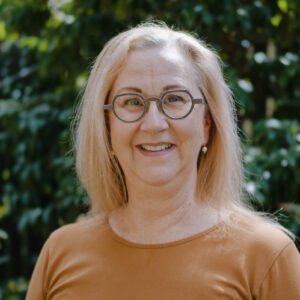
Wendy’s background includes MMSt (vocal pedagogy), BVSc, BEd, and Australian Kodály Certificate. Her PhD research tracks vocal development of adolescent girls. Wendy has presented for Kodály Australia, ANATS and ANCA on vocal health for teachers and vocal pedagogy. She is committed to using evidence-based practice to foster healthy, sustainable singing.
Presented by:
- Nicholls Building - Music Room
- Paper Presentation
Make more time to sing and move – an early career teacher reflection of helpful additions to a newly implemented Kodaly inspired classroom’
Presented by:
- Nicholls Building - Music Room
- Paper Presentation
Teaching using Kodaly inspired practise is a widely accepted, highly effective and fun approach to music learning, especially for children. However, newly implemented Kodaly inspired practise delivered by an early career teacher requires significant diligence and perseverance. Student turn-around, planning and assessment workload seems never ending, all while you are trying to learn this new approach to teaching.
After 5 years of implementing a new Kodaly-inspired music curriculum with students never exposed to this approach, I will share some realities, strategies and successes that have supported my students to achieve significant success in the Primary Years.
I will include pictures and videos of classroom supports, reward ideas, and learning resources, as well as routines and swift transition activities that support classroom management and provide incidental learning and/or practise for students. All of these aiming to maximise the learning experiences in 45-minute lessons, minimise classroom disruptions and keep students engaged in lessons by reducing logistical waiting time for set up and pack up. All in an attempt to ‘Make More Time To Sing and Move’
Sarah Whiteley
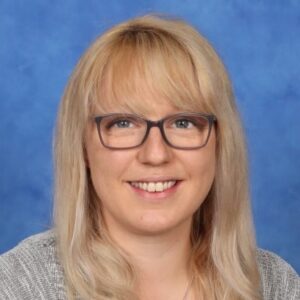
Sarah is a professional vocalist, educator, theatre director and producer from South Australia. She studied Bachelor of music in Jazz Performance, a master’s in teaching, the Australian Kodaly Certificate in Primary Music Education, and is a practitioner of the Estill Voice Model. Sarah founded the Sarah Jane Voice Studio in 2015 and is the current Arts Learning Leader at Tatachilla Lutheran College. Sarah recently spent the beginning of her maternity leave collating all her strategies and favourite Kodaly-based activities and worksheets into workbooks and PowerPoints to streamline her Primary music teaching and reduce admin time for a return to teaching after becoming a Mum!
Presented by:
- Nicholls Building - Music Room
- Paper Presentation
Day Two - Tuesday, 29 September
Dr Jason Goopy
Dr Jason Goopy is a Senior Lecturer in Music Education at Edith Cowan University and a Fulbright Scholar. He lectures and coordinates secondary and instrumental music education for the School of Education and the Western Australian Academy of Performing Arts (WAAPA). Drawing on two decades of teaching music in studio, school, tertiary, and community settings, he is recognised for creating flourishing music learning programs.
Jason’s research examines how music education positively transforms lives at the intersection of music, education, and psychology using creative arts-based and mixed-method approaches. He focuses on how intentional music engagement and learning enhance young people’s wellbeing and how their educators can be supported. As a 2025-26 Fulbright Postdoctoral Scholar hosted by Teachers College, Columbia University, Jason investigated how learning music in New York City supports the wellbeing of young people experiencing adversity.
With a longstanding commitment to service leadership, Jason has been recognised with a Fellowship of the Australian Society for Music Education (FASME). He is the Immediate Past President of ASME and Kodály Australia, a member of the National Advocates for Arts Education, and an Advisory Group Member for the national initiatives, Music Education: Right from the Start and Australian Youth Orchestra’s Music in Me.
8:45 am
Musicianship Level 1
Presented by:
- Graham Lange Centre - 3.1 & 3.2
Lucinda Geoghegan
Lucinda Geoghegan graduated in music from the University of Edinburgh in 1982, completed a postgraduate teaching qualification at Moray House College of Education and trained with the Kodály Institute of Britain where she gained an Advanced Diploma in musicianship with Distinction. She worked as a secondary music teacher in Edinburgh before deciding to specialise in Primary and Early Years Music Education. She was also a theory and musicianship lecturer at the Royal Conservatoire of Scotland for 20 years.
Lucinda is currently Creative Learning Director for NYCOS and a regular tutor, and Chair of the Education Planning Board for the British Kodály Academy. She is also a board member of the International Kodály Society. Lucinda has a strong commitment to music education according to the Kodály concept and her work involves training in musicianship and methodology throughout UK. Further afield, she regularly delivers courses Australia, Asia, Europe, New Zealand and South Africa.
Publications written by Lucinda for NYCOS include – Singing Games and Rhymes series and with Christopher Bell she wrote the musicianship programme Go for Bronze, Go for Silver and Go for Gold, the latter being recognised by ABRSM.
9:30 am
Musicianship
Kate Tyson
Kate Tyson (née Thompson) is a frequent guest clinician at conferences and workshops across Australia and the Asia-Pacific region. She has taught classroom music for almost two decades in both state and independent schools and is currently the Subject Coordinator for Music at Ambrose Treacy College in Brisbane, where she works across both the Primary and Secondary schools.
Kate has a passion for community singing and has conducted numerous choirs in both Canada and Australia, including the Voices of Birralee. She is a Past President of Kodály Queensland and has contributed to Kodály teacher education programs in Queensland, New South Wales, South Australia, Western Australia, New Zealand and Malaysia. Most recently, she was the Middle Years presenter at Independent Schools Queensland’s Harmonise & Innovate Conference, and her work with Years 5 and 6 is currently featured in an education filming project developing resources for teacher professional learning. In 2026, she was nominated for an EREA Charter Leadership Award.
Kate is known for delivering practical, high-energy professional learning that equips teachers with creative, immediately applicable strategies for the music classroom.
Dr Jason Goopy
Dr Jason Goopy is a Senior Lecturer in Music Education at Edith Cowan University and a Fulbright Scholar. He lectures and coordinates secondary and instrumental music education for the School of Education and the Western Australian Academy of Performing Arts (WAAPA). Drawing on two decades of teaching music in studio, school, tertiary, and community settings, he is recognised for creating flourishing music learning programs.
Jason’s research examines how music education positively transforms lives at the intersection of music, education, and psychology using creative arts-based and mixed-method approaches. He focuses on how intentional music engagement and learning enhance young people’s wellbeing and how their educators can be supported. As a 2025-26 Fulbright Postdoctoral Scholar hosted by Teachers College, Columbia University, Jason investigated how learning music in New York City supports the wellbeing of young people experiencing adversity.
With a longstanding commitment to service leadership, Jason has been recognised with a Fellowship of the Australian Society for Music Education (FASME). He is the Immediate Past President of ASME and Kodály Australia, a member of the National Advocates for Arts Education, and an Advisory Group Member for the national initiatives, Music Education: Right from the Start and Australian Youth Orchestra’s Music in Me.
Dr James Cuskelly
Dr James Cuskelly has a broad base in education, having taught in pre-school, primary and secondary classrooms as well as serving as Head of Music Education and Aural Studies at The University of Queensland, 2000 – 2009. His passion for music, and his ability to enthuse and bring about effective learning in students across all ages or abilities, is internationally recognized. James is committed to teacher training in music education, and consequently, is frequently asked to lead teacher in-service programs and workshops. He runs a variety of accredited teacher training programs both in Australia and internationally. Dr Cuskelly was awarded the Medal of the Order of Australia (OAM) for service to music education in The Queen’s Birthday 2018 Honours List.
Dr Árpád Tóth
Dr. Árpád Tóth is a worldwide sought-after music educator, choral conductor, artistic director of several festivals, and a community leader. He believes passionately in the strength of human diversity, the power of music making, and in art education. He is well-known in Hungary because he is the founding leader of Hungary’s largest community choir, Csíkszerda, and the internationally well-known festival franchise, Night of Choirs. He leads the most successful educational program, “Hangadó” in the Hungarian Music House and currently teaches music educational subjects in a Hungarian minority University in Oradea, Romania (Partium). His international career has led him on a yearly basis for more than 15 countries in four continents: Australia, Asia, Europe, and North America. Some of his public speeches went viral, as he speaks about his firm belief: Singing belongs to everyone.
Early Years Pedagogy
Presented by:
- Graham Lange Centre - 3.1 & 3.2
Lucinda Geoghegan
Lucinda Geoghegan graduated in music from the University of Edinburgh in 1982, completed a postgraduate teaching qualification at Moray House College of Education and trained with the Kodály Institute of Britain where she gained an Advanced Diploma in musicianship with Distinction. She worked as a secondary music teacher in Edinburgh before deciding to specialise in Primary and Early Years Music Education. She was also a theory and musicianship lecturer at the Royal Conservatoire of Scotland for 20 years.
Lucinda is currently Creative Learning Director for NYCOS and a regular tutor, and Chair of the Education Planning Board for the British Kodály Academy. She is also a board member of the International Kodály Society. Lucinda has a strong commitment to music education according to the Kodály concept and her work involves training in musicianship and methodology throughout UK. Further afield, she regularly delivers courses Australia, Asia, Europe, New Zealand and South Africa.
Publications written by Lucinda for NYCOS include – Singing Games and Rhymes series and with Christopher Bell she wrote the musicianship programme Go for Bronze, Go for Silver and Go for Gold, the latter being recognised by ABRSM.
11:00 am
Pedagogy
Lower Primary Pedagogy
Presented by:
- Graham Lange Centre - 2.1 & 2.2
Dr James Cuskelly
Dr James Cuskelly has a broad base in education, having taught in pre-school, primary and secondary classrooms as well as serving as Head of Music Education and Aural Studies at The University of Queensland, 2000 – 2009. His passion for music, and his ability to enthuse and bring about effective learning in students across all ages or abilities, is internationally recognized. James is committed to teacher training in music education, and consequently, is frequently asked to lead teacher in-service programs and workshops. He runs a variety of accredited teacher training programs both in Australia and internationally. Dr Cuskelly was awarded the Medal of the Order of Australia (OAM) for service to music education in The Queen’s Birthday 2018 Honours List.
Kate Tyson
Kate Tyson (née Thompson) is a frequent guest clinician at conferences and workshops across Australia and the Asia-Pacific region. She has taught classroom music for almost two decades in both state and independent schools and is currently the Subject Coordinator for Music at Ambrose Treacy College in Brisbane, where she works across both the Primary and Secondary schools.
Kate has a passion for community singing and has conducted numerous choirs in both Canada and Australia, including the Voices of Birralee. She is a Past President of Kodály Queensland and has contributed to Kodály teacher education programs in Queensland, New South Wales, South Australia, Western Australia, New Zealand and Malaysia. Most recently, she was the Middle Years presenter at Independent Schools Queensland’s Harmonise & Innovate Conference, and her work with Years 5 and 6 is currently featured in an education filming project developing resources for teacher professional learning. In 2026, she was nominated for an EREA Charter Leadership Award.
Kate is known for delivering practical, high-energy professional learning that equips teachers with creative, immediately applicable strategies for the music classroom.
Dr Jason Goopy
Dr Jason Goopy is a Senior Lecturer in Music Education at Edith Cowan University and a Fulbright Scholar. He lectures and coordinates secondary and instrumental music education for the School of Education and the Western Australian Academy of Performing Arts (WAAPA). Drawing on two decades of teaching music in studio, school, tertiary, and community settings, he is recognised for creating flourishing music learning programs.
Jason’s research examines how music education positively transforms lives at the intersection of music, education, and psychology using creative arts-based and mixed-method approaches. He focuses on how intentional music engagement and learning enhance young people’s wellbeing and how their educators can be supported. As a 2025-26 Fulbright Postdoctoral Scholar hosted by Teachers College, Columbia University, Jason investigated how learning music in New York City supports the wellbeing of young people experiencing adversity.
With a longstanding commitment to service leadership, Jason has been recognised with a Fellowship of the Australian Society for Music Education (FASME). He is the Immediate Past President of ASME and Kodály Australia, a member of the National Advocates for Arts Education, and an Advisory Group Member for the national initiatives, Music Education: Right from the Start and Australian Youth Orchestra’s Music in Me.
Choral and Conducting Pedagogy
Presented by:
- Graham Lange Centre - 3.5 & 3.6
Dr Árpád Tóth
Dr. Árpád Tóth is a worldwide sought-after music educator, choral conductor, artistic director of several festivals, and a community leader. He believes passionately in the strength of human diversity, the power of music making, and in art education. He is well-known in Hungary because he is the founding leader of Hungary’s largest community choir, Csíkszerda, and the internationally well-known festival franchise, Night of Choirs. He leads the most successful educational program, “Hangadó” in the Hungarian Music House and currently teaches music educational subjects in a Hungarian minority University in Oradea, Romania (Partium). His international career has led him on a yearly basis for more than 15 countries in four continents: Australia, Asia, Europe, and North America. Some of his public speeches went viral, as he speaks about his firm belief: Singing belongs to everyone.
How to integrate Kodaly based pedagogy into Instrumental Teaching and apply it to your Classroom Ensemble
Presented by:
- Nicholls Building - Band Room
- Workshop
This interactive workshop is designed for educators teaching classroom ensembles or instrumental music lessons who seek greater rigour in their teaching practice, whilst embedding a deep-seated understanding of musicianship and music literacy in their students.
During the workshop participants will explore practical strategies for integrating Kodály-based pedagogy within a classroom ensemble setting, with a particular focus on making singing an integral part of school culture and a symbiotic component of instrumental teaching through the use of solfa and rhythm names. We’ll discuss how to align the Kodaly principle of “sound before symbol” with the practical demands of music reading in a classroom ensemble context, and how to teach both effectively for maximum student success. We’ll look at games and activities suited to ensemble settings, adaptable for groups of varying sizes, and discuss approaches to balancing the diverse skill levels commonly found among instrumental students.
Emphasis will be placed on the prepare and practice stages of the Kodály pedagogy. Participants will form a workshop vocal ensemble to practise these skills in real time.
Kerry Trounson
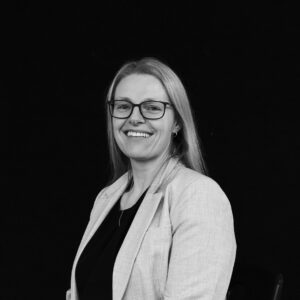
Kerry Trounson is an honours graduate of the University of Melbourne, Conservatorium of Music, with majors in instrumental teaching and conducting, alongside a Dip. Ed (Applied Learning) from Deakin University. With over 35 years of musical experience she is a passionate advocate for Kodály based education and firmly believes in its principles as the foundation for all students’ musical learning. She has spent years embedding this approach in both her classroom and instrumental teaching, ensuring that students develop strong musicianship, aural skills, and a lifelong connection to music.
11:55 AM
Move to Next Session
12:00 pm
Elective Sessions
- Click each heading to read about the session!
Presented by:
- Nicholls Building - Band Room
- Workshop
Keep the Metre Running
Presented by:
- Graham Lange Centre - 2.5 & 2.6
- Workshop
In this workshop, I will detail the benefits of teaching metre and concepts such as time signatures through movement. Feeling strong and weak beats, bars and phrases is such a kinaesthetic experience, and yet so many of us were taught in abstract, mathematical ways, devoid of any musicality or feeling. In this workshop I will provide repertoire, art music samples, folk dances and games to enable the teaching of 2 metre, 3 metre, 4 metre and irregular metres such as 5/4 time.
Jenny Ferris
Jenny is an up-and-coming Kodaly-influenced music teacher in Melbourne. She holds a Bachelor and Masters of Music from Melbourne Uni and last year returned from Kecskemet, Hungary where she undertook both the Diploma and Masters courses.
Open Rehearsal: Young Voices of Melbourne
Presented by:
- Wyatt Hall
- Workshop
Experience a typical rehearsal with the Young Voices of Melbourne as they learn new repertoire, rehearse works-in-progress, and polish current performance pieces. Possible topics that may come up during the rehearsal are: learning with solfa, using movement, unifying vowels, navigating foreign languages, musicality and expression…and more! Session observers will get to participate at several points during the rehearsal to experiment with rehearsal strategies themselves.
Juliana Kay
A trained secondary school teacher and Kodaly-inspired educator, Juliana has been conducting choirs and teaching in schools since 2016, while maintaining her own practice as a singer and award-winning composer. She is regularly commissioned to write new music for chamber choirs, amateur choirs and school choirs across Australia, and in 2024 was one of four finalists for the Australian Art Music Awards: Choral Work of the Year. In 2018 she founded innovative chamber choir Choral Edge, which saw her regularly experimenting with multimedia performances and collaborations with comedians, visual artists and theatre directors. Outside of Australia, Juliana has led singing and musicianship workshops in Chile through the Global Leaders Institute, observed and learned from conductors in New Zealand, USA and Cuba, supported by the Sydney Symposium Choral Foundation Conducting Scholarship, and conducted Exaudi on tours to Scotland/Ireland, Italy/Spain, New Zealand and Chile/Brazil.
The Second Best Time is Now: Weaving Kodaly-Inspired Practice into Secondary Music Classrooms
Presented by:
- Graham Lange Centre - 2.1 & 2.2
- Workshop
Students arrive in our secondary classrooms with great diversity of experience, preconceived musical identities, and expectations about what this subject of “Music” will be. Navigating existing curriculum structures, elective timetabling, and students who are hesitant to sing, we may wonder if Kodály-inspired music learning is something students must encounter in the primary years, and it is now “too late” to begin. This interactive workshop offers a pathway forward, celebrating the opportunities ahead. If our students cannot begin their Kodály journey “nine months before the birth of the mother”, the second best time is now.
Designed for teachers working with secondary students who have not previously learned through a Kodály approach, the session shares practical, embodied, and inclusive strategies that can be integrated into existing music programs, supporting students to gain confidence using their voices, bodies, ears, and ideas. Rather than proposing a wholesale curriculum overhaul, the workshop models how elements of Kodály pedagogy can be woven into current practice as a complementary and flexible approach.
Participants will engage in hands-on musical activities that introduce, dig into, and creatively extend repertoire. Examples will demonstrate how aspects of gradual musicianship, inner hearing, and creativity can be supported through selective Kodály planning approaches. The session also explores ways we can incorporate contemporary technologies and genres when teaching musicianship, supporting differentiation and student agency.
The aim of this workshop is to build teacher confidence and provide concrete, adaptable strategies for beginning, deepening, and sustaining musicianship learning with secondary students. Outcomes include practical classroom activities, ideas for Kodály-informed lesson and unit planning, and approaches to building singing into the classroom in welcoming, low-stakes ways that respect student vulnerability while encouraging musical risk-taking.
Felicity Davies
Felicity Davies is a music educator and consultant who has taught across Early Years to tertiary settings. She is passionate about inclusive, playful music making that fosters multiple pathways and belonging for students. In the classroom, she enjoys weaving together diverse music and practices from Bach to Billie Eilish through Kodaly principles, building strong foundations and high ceilings.
Presented by:
- Graham Lange Centre - 2.1 & 2.2
- Workshop
Singable picture books for the music classroom: Contemporary repertoire embracing cultural diversity and inclusion
Presented by:
- Graham Lange Centre - 3.1 & 3.2
- Workshop
Be serenaded through a ‘Symphony of Stories’ in this interactive workshop. Delve into a new repertoire of picture books for the music classroom that go beyond traditional nursery-rhymes, taking you on a journey into a culturally responsive, exciting, and inclusive world of literature and music. Explore how to use singable picture books to break barriers in your class through practical activities and examples for students up to Year 6.
Over the last decade, Lisa and Rosalie have collected hundreds of examples of beautifully illustrated and well-constructed repertoire to sing to children. Share with us some of our newest favourites, specifically chosen to be age and curriculum appropriate in a contemporary Australian setting. Alongside performances of repertoire, learn how to access digital resources for general use by the music specialist, and quality sung-for-you examples for relief lessons, ‘lost voice’ moments or generalist teachers with an interest in cross-curricular collaboration.
Singing a picture book is not just a static experience, but a living experience that can enrich the life of your classroom. Learn to use books as; doorways to discussion, classroom management tools, a vehicle for visible inclusivity, and a musical discovery. The emotional, physical and intellectual response to singing a book to a classroom of students is unique. This workshop aims to unpack these experiences with practical tools and recommendations to take straight to your classroom.
Elizabeth Hampton
Elizabeth studied Children’s Literature at Claremont Teachers College and has volunteered at kindergartens and primary schools, serving on the South Australian Government Early Childhood Advisory Council. She trained as a Reading Recovery specialist, and was appointed as an English Language Specialist for a hospital in the middle east, before returning to retire in Adelaide.
Rosalie Scott
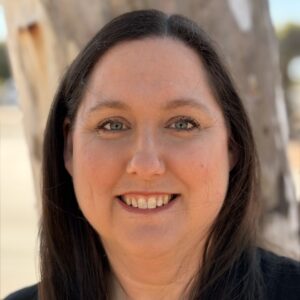
Rosalie Scott is an Australian Kodály Certificate accredited lecturer working nationally as a trainer for Primary and Secondary Music Pedagogy and Kodály-inspired musicianship, with an interest in Social & Emotional Learning through Music Education. Currently Director of Music at John Paul College, Kalgoorlie and studying a Master of Education through Edith Cowan University
Presented by:
- Graham Lange Centre - 3.1 & 3.2
- Workshop
Insights from Community Music & Kodály Nova
Presented by:
- Nicholls Building - Music Room
- Paper Presentation
Insights from Community Music
Music plays a central role in the life of adolescents, impacting wellbeing and identity, however, this is often contrasted with limited engagement in formal school-based music education. Why are youth motivated to participate in non-formal community musicking? How does this contribute to their thriving? What lessons can school-based music education take from this? This paper examines the motivations of youth to participate in community musicking and the contribution of this to flourishing, using the constructs of positive psychology and positive youth development. Community musicking is used as an external reference point, providing a contrasting perspective through which school music education can be re-envisaged.
Kodály Nova
We live in a rapidly changing global and educational context which challenges notions of discrete, definable elements, traditional music literacy, neatly categorised masterworks, and definitions of quality. On the one hand, we steward a tradition of excellence in Kodály musicianship, which more than meets the need to test, measure and categorise student achievement, competitively ranking students for tertiary entrance, or preparing them with the necessary skills to become professional musicians. On the other hand, we find the increasingly blurred boundaries of technology, and the new frontiers of creativity beyond the classroom, accessibility and relevance in a rapidly changing educational context. This tension between the ‘old’ and the ‘new’ presents a liminal space, a challenge, but also an opportunity for Kodály educators. The aim of this paper is to examine the scope of Kodály practice to respond to current research trends, our strengths, and where we are currently constrained, needing to adapt to be fit for purpose. This paper will provide an overview of the literature, highlighting key issues that challenge traditional Secondary Music Education, and by extension, Kodály practice. Challenges such as relevancy, engagement and credible creativity, course construction and broader education, will be posited as opportunities for thriving in our collective Kodály journey.
Peter Shanhun
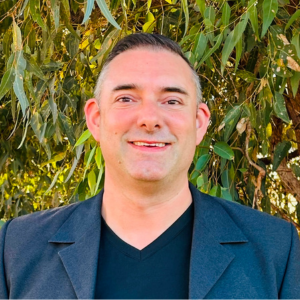
Peter Shanhun has over 20 years experience teaching K–12 music. He holds the Australian Kodály Certificate and a Master of Kodály Music Pedagogy from the Kodály Institute. He now lectures at Edith Cowan University and is completing a PhD at Monash University exploring flourishing in youth community musicking.
Presented by:
- Nicholls Building - Music Room
- Paper Presentation
Young Voices of Melbourne
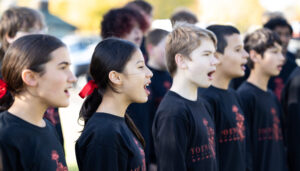
Young Voices of Melbourne is one of Australia’s finest choral programs for young singers, renowned for its passionate performances, engaging repertoire and outstanding Kodály-based music education program. Under the direction of Juliana Kay, YVM trains singers from age 0 to 30 across six choirs and an early childhood program.
Young Voices of Melbourne was founded in 1990 by Mark O’Leary and has a proud history of performing, recording and touring. Aside from hosting regular concerts in Melbourne, its choirs have performed at major events and festivals, including the 2006 Commonwealth Games Opening Ceremony (Melbourne), National Folk Festival (Canberra), Festival of Voices (Hobart) and three concerts with the Melbourne Symphony Orchestra in 2024. The choir has released 13 CD recordings of Australian and international children’s choral music.
YVM has a long history of touring, having undertaken 22 Australian tours to all corners of the country, and 11 international tours to Europe, South Africa, Canada, the USA, Singapore, Thailand, Samoa, New Zealand and Japan.
1:50 pm
Dr Árpád Tóth
Dr. Árpád Tóth is a worldwide sought-after music educator, choral conductor, artistic director of several festivals, and a community leader. He believes passionately in the strength of human diversity, the power of music making, and in art education. He is well-known in Hungary because he is the founding leader of Hungary’s largest community choir, Csíkszerda, and the internationally well-known festival franchise, Night of Choirs. He leads the most successful educational program, “Hangadó” in the Hungarian Music House and currently teaches music educational subjects in a Hungarian minority University in Oradea, Romania (Partium). His international career has led him on a yearly basis for more than 15 countries in four continents: Australia, Asia, Europe, and North America. Some of his public speeches went viral, as he speaks about his firm belief: Singing belongs to everyone.
2:30 pm
Recorder is Not Dead!
Presented by:
- Nicholls Building - Band Room
- Workshop
A recorder program modelled on the Kodály philosophy and belt reward system is alive and well at Hillcrest Christian College. Developed by Tammy Kilpatrick, this program fosters an aural-vocal approach, engaging activities, opportunities for part-work and the move to fixed letter names. This workshop will examine effective lesson sequencing, including the preparation of musical concepts through singing, movement, and games. It will also highlight valuable online resources and demonstrate how the Seesaw platform can be used to support differentiation, practice, assessment, and feedback.
Tammy Kilpatrick
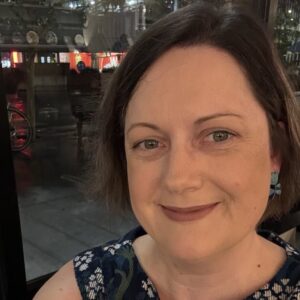
Tammy brings over 25 years of music teaching experience, with a strong passion for early childhood education. She teaches in Hillcrest Christian College’s Early and Primary Music and Choral Programs. Her qualifications include a Bachelor of Music, Australian Kodály Certificate, Postgraduate Certificate in Music Play Therapy, and Master of Music.
3:45 pm
Elective Sessions
- Click each heading to read about the session!
Keep the Beat Alive! – Beat Games and Activities Across the Primary Years
Presented by:
- Graham Lange Centre - 2.5 & 2.6
- Workshop
A key Kodály principle is that beat is the foundational element of music upon which all other musical concepts are built. It is an essential key element and the heart of musical understanding. The beat must be felt physically and internalised before being formally taught. We want it to be something that children can do intrinsically without thinking so that they have greater success with more complex elements such as metre and rhythm.
This interactive workshop will explore:
- How to explicitly teach the concept of beat before formally “presenting” it
- Opportunities to physically internalise the beat through a range of clapping games, passing games and body percussion
- The use of visual aids and manipulatives to support the physical internalisation of beat and how this can support students with additional learning needs
- The use of fun and interactive beat games as a “way in” when teaching older beginners who have not experienced a Kodály based lesson
- How to build beat confidence by including regular movement activities and games across the primary years
Stefania Miller
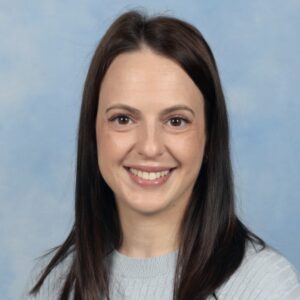
Stefania Miller has taught classroom music for 14 years and is currently the Classroom Music Specialist (Prep- Year 6) and Choral Conductor at St. Cecilia’s Primary School in Glen Iris, Melbourne. Stefania’s enthusiasm for Kodaly based music education comes from her love of singing and musical theatre. She completed the Australian Kodaly Certificate in 2018 and since then has been passionate about creating fun and exciting musical experiences for her students which are engaging and inclusive of all abilities.
Presented by:
- Graham Lange Centre - 2.5 & 2.6
- Workshop
Inkamala- Let’s sing
Presented by:
- Wyatt Hall
- Workshop
In Anangu (Pitjantjatjara and Yankunytjatjara) communities and lifeworlds, song is a life-giving thread that draws together Country, stories, histories, law, dance, creation, and relatedness. Similarly, singing is a vital ingredient to a healthy and engaging school-based education where first languages and knowledges are centred.
Associate Professor Sam Osborne has worked in Anangu Educaiton for more than 30 years and will share a history of singing in Anangu schooling as well as resources developed for high quality first language and music activities in Anangu schools. Sam is the Associate Director, Regional Engagement (APY Lands) and coordinates the Pitjantjatjara Yankunytjatjara language and culture courses at Adelaide University. The workshop will explain the University’s pedagogical approach to learning Pitjantjatjara and Yankunytjatjara language and how this pedagogy shapes the method for choral and group singing in Anangu communities. Sam will also share a little about the resurgence of the Ernabella choral tradition through the Ernabella Anangu School choir and the Iwiri choir.
Adelaide University has a partnership with Iwiri Aboriginal Corporation, a member-based community organisation for Anangu living in Adelaide. Through this partnership, Adelaide University works with senior Anangu language and cultural experts. As part of the workshop, there will be opportunities to sing along in Pitjantjatjara language with an Anangu tutor to guide us.
Sam Osborne
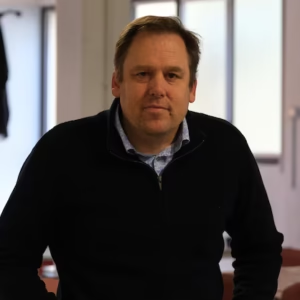
Bio to come
Level Up: Gamified Musicianship
Presented by:
- Graham Lange Centre - 2.1 & 2.2
- Workshop
This practical, hands-on workshop explores engaging ways to teach aural and theory skills through gamified learning grounded in Kodály principles. Designed for lower-secondary students, the session demonstrates how singing, movement, and structured play can be used to develop pitch accuracy, rhythmic security, and musical understanding, while also building confidence and promoting inclusion.
The workshop reframes aural and theoretical learning as an active and enjoyable process rather than a passive or abstract one. Participants will take part in a range of classroom-ready games and activities that integrate solfa, rhythm syllables, inner hearing, and movement. These approaches provide immediate feedback, encourage deep musical engagement, and are easily adapted for mixed-ability classrooms without compromising musical rigour.
By participating in the activities as learners, attendees will gain insight into how gamified strategies support kinaesthetic learning, sustain motivation, and encourage risk-taking within a supportive environment. The session also addresses ways to align these activities with curriculum requirements while remaining true to the Kodály emphasis on singing as the foundation of musicianship.
Tsun-En Cheng
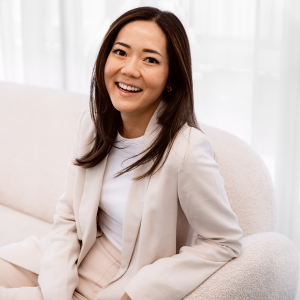
Tsun-En Cheng is a flexible and experienced music educator who enjoys supporting students and teachers in building meaningful connections through music. Having taught in Western Australia and the Northern Territory, she brings a practical, grounded approach to Kodály pedagogy and curriculum design, supported by a Master of Education in Leadership and Management.
Presented by:
- Graham Lange Centre - 2.1 & 2.2
- Workshop
Sing First, Play Better: Connecting Classroom, Choral and Instrumental Music
Presented by:
- Graham Lange Centre - 3.1 & 3.2
- Workshop
This workshop explores how a Kodály informed approach can create a connected musical journey. When musical language and pedagogy are consistent across classroom and rehearsal settings, students develop confidence, independence and deep musical understanding that transfers seamlessly from singing to playing.
Through practical activities drawn from classroom, choir, band and string programmes, participants will experience how musical concepts and language intentionally transfer between settings to support student success across the entire music programme.
Participants will:
- Understand how to create continuity between classroom and ensemble music programmes
- Experience practical ways to transfer Kodály strategies into instrumental lessons
- Explore repertoire that intentionally connects classroom, choral and instrumental learning
- Gain tools for building a shared musical language across a music department
- See how this approach strengthens musical literacy, intonation, ensemble skills and student independence
Alina Belshaw
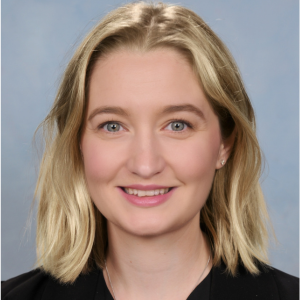
Alina Belshaw is Head of Preparatory School Music at Shore School in Sydney, where she leads classroom, choral and instrumental programmes from ELC to Year 6. Her work is grounded in Kodály and Orff pedagogy and focuses on creating a connected musical journey for students across all areas of the music program. She is also a conductor with the Sydney Youth Orchestras Strings Program and has taught primary music education at Australian Catholic University. She holds a B.Mus B.Ed (with distinction) from UNSW and has completed Kodály Early Childhood Levels 1 and 2 and Primary Levels 1, 2 and 3, as well as Orff Schulwerk Levels I–IV.
Presented by:
- Graham Lange Centre - 3.1 & 3.2
- Workshop
A Place to Belong: Sip and Sing Choir
Presented by:
- Nicholls Building - Music Room
- Paper Presentation
This paper explores a Sip and Sing Choir. A lunchtime vocal program designed for boys who experience limited social belonging in the playground and seek a safe, affirming alternative space. The choir functions as a community of care where students bring their lunch, sing together, and develop a sense of identity, agency, and connection through music.
Grounded in Kodály-inspired pedagogical principles, the program prioritises accessible, high-quality vocal repertoire, sequential skill development, and joyful music-making. The group is run by a music teacher, accompanist, and additional music teacher to create a supportive musical environment that scaffolds participation and nurtures confidence.
Drawing on narratives of student experience, this paper examines how semi-structured singing in a familiar environment fosters emotional safety and peer belonging. Repertoire is intentionally selected to support social engagement and musical success, encouraging junior schoolboys (Year 5 and 6) to continue singing beyond the session and into their daily lives. The choir becomes more than an extracurricular activity; it is a social anchor that positions students as capable musicians and valued members of a community. This study contributes to discussions of belonging, gender, and inclusive music education by demonstrating how intentional vocal programs can transform school spaces into places where students feel seen, heard, and connected.
Belinda Dolan
Belinda is coordinator of curriculum music at St Joseph’s Nudgee College. She enjoys teaching in the middle phase of education and has an interest in instrumental immersion and using technology to support learning in the music classroom. At Nudgee College Belinda teaches year 5 – 7 music.
Presented by:
- Nicholls Building - Music Room
- Paper Presentation
Day Three - Wednesday, 30 September
Lucinda Geoghegan
Lucinda Geoghegan graduated in music from the University of Edinburgh in 1982, completed a postgraduate teaching qualification at Moray House College of Education and trained with the Kodály Institute of Britain where she gained an Advanced Diploma in musicianship with Distinction. She worked as a secondary music teacher in Edinburgh before deciding to specialise in Primary and Early Years Music Education. She was also a theory and musicianship lecturer at the Royal Conservatoire of Scotland for 20 years.
Lucinda is currently Creative Learning Director for NYCOS and a regular tutor, and Chair of the Education Planning Board for the British Kodály Academy. She is also a board member of the International Kodály Society. Lucinda has a strong commitment to music education according to the Kodály concept and her work involves training in musicianship and methodology throughout UK. Further afield, she regularly delivers courses Australia, Asia, Europe, New Zealand and South Africa.
Publications written by Lucinda for NYCOS include – Singing Games and Rhymes series and with Christopher Bell she wrote the musicianship programme Go for Bronze, Go for Silver and Go for Gold, the latter being recognised by ABRSM.
8:45 am
Musicianship Level 1
Presented by:
- Graham Lange Centre - 3.1 & 3.2
Lucinda Geoghegan
Lucinda Geoghegan graduated in music from the University of Edinburgh in 1982, completed a postgraduate teaching qualification at Moray House College of Education and trained with the Kodály Institute of Britain where she gained an Advanced Diploma in musicianship with Distinction. She worked as a secondary music teacher in Edinburgh before deciding to specialise in Primary and Early Years Music Education. She was also a theory and musicianship lecturer at the Royal Conservatoire of Scotland for 20 years.
Lucinda is currently Creative Learning Director for NYCOS and a regular tutor, and Chair of the Education Planning Board for the British Kodály Academy. She is also a board member of the International Kodály Society. Lucinda has a strong commitment to music education according to the Kodály concept and her work involves training in musicianship and methodology throughout UK. Further afield, she regularly delivers courses Australia, Asia, Europe, New Zealand and South Africa.
Publications written by Lucinda for NYCOS include – Singing Games and Rhymes series and with Christopher Bell she wrote the musicianship programme Go for Bronze, Go for Silver and Go for Gold, the latter being recognised by ABRSM.
9:30 am
Musicianship
Kate Tyson
Kate Tyson (née Thompson) is a frequent guest clinician at conferences and workshops across Australia and the Asia-Pacific region. She has taught classroom music for almost two decades in both state and independent schools and is currently the Subject Coordinator for Music at Ambrose Treacy College in Brisbane, where she works across both the Primary and Secondary schools.
Kate has a passion for community singing and has conducted numerous choirs in both Canada and Australia, including the Voices of Birralee. She is a Past President of Kodály Queensland and has contributed to Kodály teacher education programs in Queensland, New South Wales, South Australia, Western Australia, New Zealand and Malaysia. Most recently, she was the Middle Years presenter at Independent Schools Queensland’s Harmonise & Innovate Conference, and her work with Years 5 and 6 is currently featured in an education filming project developing resources for teacher professional learning. In 2026, she was nominated for an EREA Charter Leadership Award.
Kate is known for delivering practical, high-energy professional learning that equips teachers with creative, immediately applicable strategies for the music classroom.
Dr Jason Goopy
Dr Jason Goopy is a Senior Lecturer in Music Education at Edith Cowan University and a Fulbright Scholar. He lectures and coordinates secondary and instrumental music education for the School of Education and the Western Australian Academy of Performing Arts (WAAPA). Drawing on two decades of teaching music in studio, school, tertiary, and community settings, he is recognised for creating flourishing music learning programs.
Jason’s research examines how music education positively transforms lives at the intersection of music, education, and psychology using creative arts-based and mixed-method approaches. He focuses on how intentional music engagement and learning enhance young people’s wellbeing and how their educators can be supported. As a 2025-26 Fulbright Postdoctoral Scholar hosted by Teachers College, Columbia University, Jason investigated how learning music in New York City supports the wellbeing of young people experiencing adversity.
With a longstanding commitment to service leadership, Jason has been recognised with a Fellowship of the Australian Society for Music Education (FASME). He is the Immediate Past President of ASME and Kodály Australia, a member of the National Advocates for Arts Education, and an Advisory Group Member for the national initiatives, Music Education: Right from the Start and Australian Youth Orchestra’s Music in Me.
Dr James Cuskelly
Dr James Cuskelly has a broad base in education, having taught in pre-school, primary and secondary classrooms as well as serving as Head of Music Education and Aural Studies at The University of Queensland, 2000 – 2009. His passion for music, and his ability to enthuse and bring about effective learning in students across all ages or abilities, is internationally recognized. James is committed to teacher training in music education, and consequently, is frequently asked to lead teacher in-service programs and workshops. He runs a variety of accredited teacher training programs both in Australia and internationally. Dr Cuskelly was awarded the Medal of the Order of Australia (OAM) for service to music education in The Queen’s Birthday 2018 Honours List.
Dr Árpád Tóth
Dr. Árpád Tóth is a worldwide sought-after music educator, choral conductor, artistic director of several festivals, and a community leader. He believes passionately in the strength of human diversity, the power of music making, and in art education. He is well-known in Hungary because he is the founding leader of Hungary’s largest community choir, Csíkszerda, and the internationally well-known festival franchise, Night of Choirs. He leads the most successful educational program, “Hangadó” in the Hungarian Music House and currently teaches music educational subjects in a Hungarian minority University in Oradea, Romania (Partium). His international career has led him on a yearly basis for more than 15 countries in four continents: Australia, Asia, Europe, and North America. Some of his public speeches went viral, as he speaks about his firm belief: Singing belongs to everyone.
Early Years Pedagogy
Presented by:
- Graham Lange Centre - 3.1 & 3.2
Lucinda Geoghegan
Lucinda Geoghegan graduated in music from the University of Edinburgh in 1982, completed a postgraduate teaching qualification at Moray House College of Education and trained with the Kodály Institute of Britain where she gained an Advanced Diploma in musicianship with Distinction. She worked as a secondary music teacher in Edinburgh before deciding to specialise in Primary and Early Years Music Education. She was also a theory and musicianship lecturer at the Royal Conservatoire of Scotland for 20 years.
Lucinda is currently Creative Learning Director for NYCOS and a regular tutor, and Chair of the Education Planning Board for the British Kodály Academy. She is also a board member of the International Kodály Society. Lucinda has a strong commitment to music education according to the Kodály concept and her work involves training in musicianship and methodology throughout UK. Further afield, she regularly delivers courses Australia, Asia, Europe, New Zealand and South Africa.
Publications written by Lucinda for NYCOS include – Singing Games and Rhymes series and with Christopher Bell she wrote the musicianship programme Go for Bronze, Go for Silver and Go for Gold, the latter being recognised by ABRSM.
11:00 am
Pedagogy
Lower Primary Pedagogy
Presented by:
- Graham Lange Centre - 2.1 & 2.2
Dr James Cuskelly
Dr James Cuskelly has a broad base in education, having taught in pre-school, primary and secondary classrooms as well as serving as Head of Music Education and Aural Studies at The University of Queensland, 2000 – 2009. His passion for music, and his ability to enthuse and bring about effective learning in students across all ages or abilities, is internationally recognized. James is committed to teacher training in music education, and consequently, is frequently asked to lead teacher in-service programs and workshops. He runs a variety of accredited teacher training programs both in Australia and internationally. Dr Cuskelly was awarded the Medal of the Order of Australia (OAM) for service to music education in The Queen’s Birthday 2018 Honours List.
Kate Tyson
Kate Tyson (née Thompson) is a frequent guest clinician at conferences and workshops across Australia and the Asia-Pacific region. She has taught classroom music for almost two decades in both state and independent schools and is currently the Subject Coordinator for Music at Ambrose Treacy College in Brisbane, where she works across both the Primary and Secondary schools.
Kate has a passion for community singing and has conducted numerous choirs in both Canada and Australia, including the Voices of Birralee. She is a Past President of Kodály Queensland and has contributed to Kodály teacher education programs in Queensland, New South Wales, South Australia, Western Australia, New Zealand and Malaysia. Most recently, she was the Middle Years presenter at Independent Schools Queensland’s Harmonise & Innovate Conference, and her work with Years 5 and 6 is currently featured in an education filming project developing resources for teacher professional learning. In 2026, she was nominated for an EREA Charter Leadership Award.
Kate is known for delivering practical, high-energy professional learning that equips teachers with creative, immediately applicable strategies for the music classroom.
Dr Jason Goopy
Dr Jason Goopy is a Senior Lecturer in Music Education at Edith Cowan University and a Fulbright Scholar. He lectures and coordinates secondary and instrumental music education for the School of Education and the Western Australian Academy of Performing Arts (WAAPA). Drawing on two decades of teaching music in studio, school, tertiary, and community settings, he is recognised for creating flourishing music learning programs.
Jason’s research examines how music education positively transforms lives at the intersection of music, education, and psychology using creative arts-based and mixed-method approaches. He focuses on how intentional music engagement and learning enhance young people’s wellbeing and how their educators can be supported. As a 2025-26 Fulbright Postdoctoral Scholar hosted by Teachers College, Columbia University, Jason investigated how learning music in New York City supports the wellbeing of young people experiencing adversity.
With a longstanding commitment to service leadership, Jason has been recognised with a Fellowship of the Australian Society for Music Education (FASME). He is the Immediate Past President of ASME and Kodály Australia, a member of the National Advocates for Arts Education, and an Advisory Group Member for the national initiatives, Music Education: Right from the Start and Australian Youth Orchestra’s Music in Me.
Choral and Conducting Pedagogy
Presented by:
- Graham Lange Centre - 3.5 & 3.6
Dr Árpád Tóth
Dr. Árpád Tóth is a worldwide sought-after music educator, choral conductor, artistic director of several festivals, and a community leader. He believes passionately in the strength of human diversity, the power of music making, and in art education. He is well-known in Hungary because he is the founding leader of Hungary’s largest community choir, Csíkszerda, and the internationally well-known festival franchise, Night of Choirs. He leads the most successful educational program, “Hangadó” in the Hungarian Music House and currently teaches music educational subjects in a Hungarian minority University in Oradea, Romania (Partium). His international career has led him on a yearly basis for more than 15 countries in four continents: Australia, Asia, Europe, and North America. Some of his public speeches went viral, as he speaks about his firm belief: Singing belongs to everyone.
Exploring Philippine Folk Songs and Games in the Kodály Classroom
Presented by:
- Nicholls Building - Band Room
- Workshop
This practical, hands-on workshop explores culturally authentic Philippine folk songs and games through the Kodály teaching process, showing how Kodály principles of preparation, presentation, and practice can be applied to musical traditions beyond the Western canon, with pedagogical integrity, cultural authenticity, and respect held in balance. Designed for classroom and studio teachers, it offers a practical model for culturally responsive teaching in Australia’s classrooms.
The workshop opens with the kulintang sound world, an accessible entry into an unfamiliar musical culture. From this foundation, participants experience a sequenced selection of folk songs and singing games, supported by song and concept analysis connecting repertoire to purposeful learning. Activities build core musicianship; singing, movement, listening, inner hearing, ensemble awareness, while developing curiosity and cultural awareness alongside joyful engagement.
A key feature is the extension activities built from the songs and games, adaptable to different ages and settings, using readily available materials from traditional to modern, showing meaningful engagement with diverse cultures doesn’t require specialised equipment.
Participants leave with adaptable strategies for diverse musical traditions in everyday teaching, and flexibility applying Kodály principles across cultural contexts.
Princess Joyce Galicia
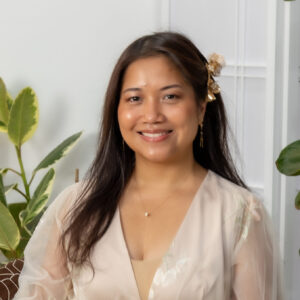
Princess Joyce “Cess” Galicia is a music educator and choral conductor with 17 years’ experience in the Philippines and Australia. She holds a Master of Music Education (Kodály emphasis) and co-directs the Adelaide Choral Ambassadors, promoting Filipino and Asian music through culturally responsive Kodály-based pedagogy in primary and community settings.
Pauline Wong
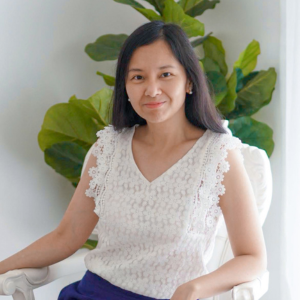
Pauline is a certified Kodály music educator, choral conductor, and pianist with teaching experience spanning three continents. Currently a piano teacher at St. Paul’s College and St. Columba College in South Australia, she holds a Post Graduate Diploma in Choral Conducting from the Kodály Institute of the Liszt Academy in Hungary, a Master of Music Education with Kodály emphasis from Holy Names University in California USA, and a Bachelor of Music in Piano Performance from the University of the Philippines, where she also graduated Cum Laude. She is also an Orff-certified educator and a former board member of the Kodály Society of the Philippines.
Pauline has taught students across local private schools, international schools, and indigenous communities in the Philippines for over a decade and also briefly taught in several institutions in California, USA. She has led musicianship sessions both for adults and children, including the Orchestra of the Filipino Youth, Suzuki National Camps, and various church-based children’s choirs in Manila. She has given workshops on applications of the Kodály approach to music educators and music education students in the Philippines and in Singapore. She is currently a performing member, resident pianist, and musicianship instructor for the Adelaide Choral Ambassadors.
11:55 AM
Move to Next Session
12:00 pm
Elective Sessions
- Click each heading to read about the session!
Presented by:
- Nicholls Building - Band Room
- Workshop
The Primary Schools Music Festival still going strong – Graham Lange Centre 2.5 & 2.6
Presented by:
- Graham Lange Centre - 2.5 & 2.6
- Workshop
The South Australian Public Primary Schools (SAPPS) Music Society oversees the Primary Schools Festival of Music, in partnership with the South Australian Department for Education. For 135 years, the Society has delivered a statewide choral program that began in 1891 with the Thousand Voice Choir and now involves more than 8,000 primary students. The program culminates in annual concerts at one of Adelaide’s premier venues, along with popular regional and outer metropolitan festivals. It is a cherished intergenerational tradition, with former choir members returning to watch their children and grandchildren perform.
Beyond the massed choir, students up to Year 11 can audition for the orchestra, from years 5-8 for the dance troupe, students from years 5-6 are in host roles, and there are soloist opportunities for choir members, all of which contribute to the vibrancy of each performance.
The South Australian Public Primary Schools Choir (The SAPPS Choir) is the showcase ensemble for the Festival and the Department for Education. Made up of auditioned students from Years 5–7, the choir rehearses weekly and provides an extension program for highly capable young musicians. Its repertoire is challenging and diverse, spanning multiple genres and styles.
We would welcome the chance to share the Festival of Music story with SING MOVE THRIVE Kodály conference participants. Despite challenges over the past five years—including COVID 19 and venue changes—the Festival has continued to adapt and flourish. Our presentation would include program insights, performance footage, teacher and student resources, and a preview of the recently completed 2026 concert series. The SAPPS Choir could also perform selected pieces for conference attendees. It would be a wonderful opportunity to showcase this iconic South Australian program to educators from across Australia and beyond.
Robyn Filmer
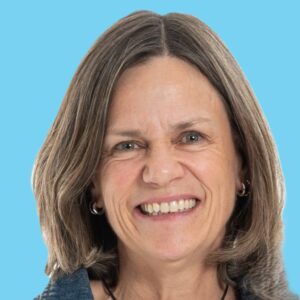
Robyn has been involved with the Primary Schools Music Festival (PSMF) since 1995 and brings more than three decades of experience in children’s choral education. After beginning her career as an early childhood educator in the country, she moved to Adelaide and joined the PSMF Family as a school-based choir teacher. She has also served as an accompanist, administrator, and HPI conductor—roles that led to the appointment as PSMF Deputy Conductor and conductor of the SAPPS Choir in 2012. She is now proudly in her 11th year as Director of Music for the PSMF.
Robyn is passionate about working with school choirs across South Australia, inspiring excellence through collaboration with motivated students and dedicated teachers. She values the growth, connection, and achievement that young students experience throughout their choir journey, recognising the lasting impact of these shared musical moments.
Committed to delivering an engaging, educational, and enjoyable choral program, Robyn is also a strong advocate for commissioning new Australian works. Since 2016 choral works have been commissioned from Richard Chew, Mark Simeon Ferguson, Glyn Lehmann, Robyn Habel, Dan Walker, Annie Kwok, Paul Jarman and Adam Page. This year, the Festival premiered the treble adaptation of Wattle Sky by Jodie O’Regan and Joe Twist.
Robyn enjoys planning the annual PSMF teacher conferences where over 300 school choir teachers and accompanists meet for an inspirational 3 days to learn repertoire, choral pedagogy and best practice, choreography, network and sing together.
Cathy Lange
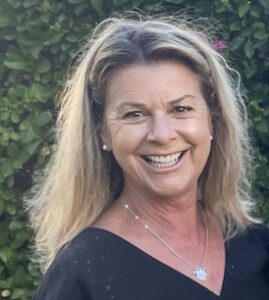
Cathy Lange has been the Assistant Director of Music since 2016 and is the main Conductor of The SAPPS Choir.
Presented by:
- Graham Lange Centre - 2.5 & 2.6
- Workshop
Sing, Move, Thrive: Uplifting the Journey in Every Lesson
Presented by:
- Wyatt Hall
- Workshop
The Kodály approach is one that emphasises the importance of developing musical literacy. Using carefully sequenced, experiential, developmental strategies in an aural-vocal pedagogy has ensured success in delivering this literacy via gradually building musical skills and knowledge.
In the primary school, a well-balanced music lesson should also provide opportunities for students to relax between concentrated focus segments. Without this mental ‘downtime’ it is difficult for students to maintain maximum engagement when it is most required. Too often well-intentioned teachers frantically try to cover important content in limited time frames, spending the whole lesson hammering important pedagogical goals at the expense of providing joy and the experience of making music for its own sake.
Activities that are complementary to pedagogical ones include tasks that encourage movement, including games, the learning of songs to prepare the next element in the sequence, or simply for the joy of singing. There are many musical goals which can be achieved via these interim segments which balance and broaden student experience, catering to a wider range of interests and needs.
This workshop will aim to rejuvenate the importance of these ‘inbetween’ moments in our lessons. Participants will be led through a series of activities and games that can be used or adapted for their own contexts to invigorate their programs. To sing, move and thrive can be goals in and of themselves, in addition to building the pedagogical understandings and skills for which the Kodály approach is celebrated.
Tess Laird
Tess Laird has been a music specialist for 35 years and holds a Masters in Music Studies from UQ. She is an accredited lecturer for the Australian Kodály Certificate and an Honorary Life Member of Kodály Australia. Tess regularly provides professional development throughout Australia supporting current and future music specialists.
Presented by:
- Wyatt Hall
- Workshop
Commissioning Success
Presented by:
- Graham Lange Centre - 2.1 & 2.2
- Workshop
Sarah Muchall
Sarah is a highly experienced classroom music specialist and choral conductor who teaches K-6 at Brisbane Boys College and Somerville House. Over the last 20 years she has worked as a conductor/workshop leader/guest instructor with primary and secondary school choirs, combined school and festival choirs, community choirs and professional vocal groups. Her international teaching experience ranges from infants to high school students, yet her heart has always been with the youngest music students.
Kathy Rappel

Bio to Come
Presented by:
- Graham Lange Centre - 2.1 & 2.2
- Workshop
Everyday Music Making for Babies and Toddlers
Presented by:
- Graham Lange Centre - 3.1 & 3.2
- Workshop
Research consistently shows that music plays a vital role in early brain development. While many parents want to give their children a strong musical start, few have experienced what a rich, developmentally appropriate musical childhood looks and sounds like.
Historically, a child’s music education began in the home where families instinctively engaged their babies and toddlers in activities that supported them to become tuneful, beatful and artful. They bounced babies on their knees while singing about horse rides, wiggled their fingers and toes as they recited poems about piggies and train carriages, they tickled palms in anticipation of a tickle under there… and sang lullabies while rocking them to sleep. These everyday interactions supported children to become musical long before formal lessons existed.
Over time, this shared musical knowledge has diminished. Increased reliance on technology and a shift toward passive music consumption have reduced opportunities for active, embodied music-making in early childhood.
This session explores the key components of high-quality music experiences for babies and toddlers, grounded in decades of research by early childhood music education expert Dr John Feierabend. Participants will gain practical tools and developmentally informed strategies to nurture musical growth during the most critical early years.
By the end of this workshop, attendees will:
- Experience and learn a practical repertoire of bounces, wiggles, tickles, tapping and clapping songs, simple songs, circle activities, movement with recorded music, and lullabies that can be used immediately
- Understand research-based principles that support musical development in infants and toddlers
- Learn how to empower parents and caregivers through child development knowledge
- Develop strategies for creating a welcoming, inclusive class environment that fosters musical connection and community
Bronwyn Lawson
Bronwyn Lawson is a passionate early childhood music educator based in Geelong, working with vulnerable communities through Bluebird Foundation. She completed an honours degree in Music Therapy from the University of Melbourne and a postgraduate Bachelor of Education from Deakin University before developing a particular interest in teaching the very young. Lawson studied with Dr John M. Feierabend at Silver Lake College in Wisconsin and became the first Australian Teacher Trainer for the Feierabend Association for Music Education. She supports educators through First Steps in Music certification and mentoring and is co-author of Everyday Music Making for Babies (GIA, 2024).
Presented by:
- Graham Lange Centre - 3.1 & 3.2
- Workshop
Music teacher learning and flourishing in Australian Kodály Certificate courses
Presented by:
- Nicholls Building - Music Room
- Paper Presentation
Music teacher learning and flourishing in Australian Kodály Certificate courses – Presented by Jason Boron and Jason Goopy
Contemporary scholarship calls for reframing deficit-oriented professional development as opportunities for teacher growth that consider the complexity of career stage and context. This study draws together teacher learning, positive psychology, and music education to examine how a professional association course supported positive music teacher learning. Twelve participants who had completed at least one level of the Australian Kodály Certificate (AKC) were invited to complete an online, individual, semi-structured interview. Data were analyzed using reflexive thematic analysis and the PERMA model to articulate characteristics of the AKC that facilitated teacher flourishing across all five wellbeing elements. Participant data reveal the reciprocal relationship between teacher learning and flourishing, each shaping and deepening the other. Flourishing was experienced differently by teachers with different backgrounds and contexts. Music teacher professional associations were found to be platforms for career-long and life-wide flourishing, offering valuable lessons for existing and new teacher learning contexts.
Dr Jason Goopy
Dr Jason Goopy is a Senior Lecturer in Music Education at Edith Cowan University and a Fulbright Scholar. He lectures and coordinates secondary and instrumental music education for the School of Education and the Western Australian Academy of Performing Arts (WAAPA). Drawing on two decades of teaching music in studio, school, tertiary, and community settings, he is recognised for creating flourishing music learning programs.
Jason’s research examines how music education positively transforms lives at the intersection of music, education, and psychology using creative arts-based and mixed-method approaches. He focuses on how intentional music engagement and learning enhance young people’s wellbeing and how their educators can be supported. As a 2025-26 Fulbright Postdoctoral Scholar hosted by Teachers College, Columbia University, Jason investigated how learning music in New York City supports the wellbeing of young people experiencing adversity.
With a longstanding commitment to service leadership, Jason has been recognised with a Fellowship of the Australian Society for Music Education (FASME). He is the Immediate Past President of ASME and Kodály Australia, a member of the National Advocates for Arts Education, and an Advisory Group Member for the national initiatives, Music Education: Right from the Start and Australian Youth Orchestra’s Music in Me.
Jason Boron
Jason Boron (BMusEd (Hons) WAust, CGMus Qld, DipKodályMusEd Liszt, MA (Hons) Liszt) is a Lecturer in Music Education and First Year Coordinator (Primary) at Edith Cowan University (ECU), where he oversees undergraduate and postgraduate units in primary music education. He has almost 20 years of experience leading university, school and community music education programs. Jason is currently President of Kodály Australia and an accredited lecturer of the Australian Kodály Certificate. He is a presenter of the Musical Foundations professional development package offered by Kodály SA for the Music Education Strategy in South Australia. Jason is a past recipient of the Sarolta Kodály Scholarship, awarded by the International Kodály Society, and in 2020 received the Vice Chancellor’s Staff Excellence Award for Innovative Teaching. Jason regularly works with children as a choral conductor for the West Australian Young Voices (WAYV).
Presented by:
- Nicholls Building - Music Room
- Paper Presentation
Sing • Move • Thrive: A Decade of Research on the AYO Music in Me Program and the Role of Mentoring in Sustaining Music Education
Presented by:
- Nicholls Building - Music Room
- Paper Presentation
Sing • Move • Thrive: A Decade of Research on the AYO Music in Me Program and the Role of Mentoring in Sustaining Music Education – Presented by Bernie Heard
The Australian Youth Orchestra’s Music in Me (MiM) program, originally the National Music Teacher Mentoring Program, was established in 2015 by the late Richard Gill AM, one of Australia’s most influential advocates for music education. A decade on, MiM has evolved into a national, in-situ mentoring initiative that pairs expert music educators with generalist primary classroom teachers to develop singing-based, sequential and literacy-rich music learning within everyday primary school contexts.
While many Music in Me mentors across Australia are highly experienced Kodály-trained educators, the program does not privilege or prescribe any particular pedagogical approach. Rather, mentors draw on a range of music education traditions and professional expertise to support teachers in delivering high-quality classroom music learning that responds to local needs and contexts. Consistent with Richard Gill’s vision that every child deserves access to quality music education, the program focuses on building teacher capability through sustained mentoring relationships, practical classroom application and a strong emphasis on singing as a foundation for musical learning.
This presentation synthesises a decade of independent research led by Professor Margaret S. Barrett (Monash University), together with Dr Katie Zhukov, Professor Graham F. Welch and colleagues. The first national evaluation demonstrated statistically significant improvements in children’s singing skills and attitudes towards music in mentored classrooms, regardless of gender, ethnicity or socio-economic background. These findings provide compelling evidence that high-quality classroom music education can be delivered by generalist teachers when supported through sustained, school-based mentoring. Complementary qualitative research identified a distinctive collaborative self-development model of mentoring that builds teacher confidence, musical identity, professional capability and communities of practice. Subsequent research confirmed that these benefits persist beyond the mentoring period, generating lasting impacts for teachers, students and whole-school music cultures.
The presentation focuses particularly on the most recent study (2024–2026), which examined how participation in MiM contributes to teacher wellbeing, career satisfaction, retention and professional sustainability. Drawing on retrospective and pre/post surveys, interviews with mentors, teachers and principals, mentoring logs and case studies, the research found that participation strengthens teachers’ professional identity, confidence to sing and teach music, sense of efficacy, and connection to meaningful educational practice. Mentors similarly reported high levels of professional fulfilment associated with sharing expertise and witnessing student and teacher growth, while also identifying administrative demands and casual employment conditions as factors that can diminish wellbeing. Principals highlighted the transformative role of singing in supporting engagement, regulation and social connection, particularly for students with additional needs and those from culturally and linguistically diverse backgrounds.
Across the research, several mentoring practices consistently emerged as critical to success: modelling, observation, responsive feedback, gradual release of responsibility and sustained relational support. These findings resonate with principles highly valued by Kodály educators, including sequential learning, musical literacy, active music-making and equitable access to high-quality music education for every child. In the spirit of Sing • Move • Thrive, the presentation concludes by exploring how mentoring can strengthen teacher confidence, support professional wellbeing and career sustainability, and expand access to joyful and meaningful music learning for every learner. It will also provide a brief overview of the program’s current national reach and opportunities for Kodály educators to engage as mentors, partner schools and advocates for quality music education.
Bernie Heard
Bernie Heard is Director of Music in Me at the Australian Youth Orchestra, leading a national teacher mentoring program that supports quality music education in primary schools across Australia. A former CEO of Sydney Youth Orchestras and Executive Director of Gondwana Choirs, she has more than two decades of leadership experience in music education, arts management and advocacy. Bernie holds degrees in Music Education and Business (MBA), is a Churchill Fellow, and works extensively with education systems, researchers and arts organisations to expand equitable access to music learning for Australian children.
Presented by:
- Nicholls Building - Music Room
- Paper Presentation
Lunchtime Concert
Presented by:
- Wyatt Hall
Young Adelaide Voices – First Concert Choir
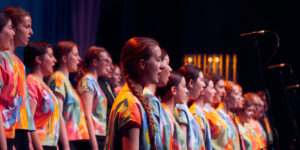
First Concert Choir
Young Adelaide Voices First Concert Choir (YAV 1CC) is the flagship youth choir of Young Adelaide Voices: an exceptional ensemble celebrated for artistry, teamwork and a vibrant commitment to Australian music for youth choirs. With a reputation for musical excellence, generosity and spirit, YAV 1CC is a dynamic presence in South Australia’s cultural life, performing at concerts, major events and professional collaborations. Led by Artistic Director Christie Anderson from 2010–2025, the choir now welcomes Michaela Eaton into the conductor’s role.
Internationally acclaimed, YAV 1CC has completed ten overseas tours to Canada, Europe, the UK, USA, China, Hong Kong and Japan. In July 2024, the choir toured France and Italy, competing in the International Choir Competition in Provence, where they won 1st place in the Youth Choir category and placed 2nd overall in the Grand Prix final by just 0.8 points. Christie Anderson received the Juror’s Special Award for Most Creative Performance, recognising imaginative programming and staging.
The choir’s international success is longstanding. Highlights include the 2016 European tour, with performances at youth music festivals in Salzburg, Bratislava and Verona. In Bratislava, YAV 1CC won three gold medals, and Christie Anderson was named Best Conductor of the Festival.
At home, 1CC continues to shine as one of Australia’s leading youth choirs. In 2022, they travelled to Hobart for Festival of Voices, representing South Australia and collaborating with outstanding Australian choirs. They are also the on-call youth choir for professional ensemble work with the Adelaide Symphony Orchestra, Australian Ballet and Adelaide Festival, most recently appearing in with flamenco guitarist Paco Peña at the final Adelaide Guitar Festival in 2024 and in The Chronicles with Stephanie Lake Company in the 2026 Festival.
1:50 pm
Dr Árpád Tóth
Dr. Árpád Tóth is a worldwide sought-after music educator, choral conductor, artistic director of several festivals, and a community leader. He believes passionately in the strength of human diversity, the power of music making, and in art education. He is well-known in Hungary because he is the founding leader of Hungary’s largest community choir, Csíkszerda, and the internationally well-known festival franchise, Night of Choirs. He leads the most successful educational program, “Hangadó” in the Hungarian Music House and currently teaches music educational subjects in a Hungarian minority University in Oradea, Romania (Partium). His international career has led him on a yearly basis for more than 15 countries in four continents: Australia, Asia, Europe, and North America. Some of his public speeches went viral, as he speaks about his firm belief: Singing belongs to everyone.
2:30 pm
Promoting a Singing and Musical Culture in Regional Public Schools.
Presented by:
- Nicholls Building - Band Room
- Workshop
Using a Kodály-inspired approach has been instrumental in inspiring and evoking change at regional public schools, on the coast of NSW. Where surf and sport has always reigned king, Imogen Stewart has been building and embedding a singing culture with high school and primary students and staff. Initial challenges included student resistance, stigma surrounding singing, and staff uncertainty. By positioning singing as a central and shared musical experience, consistent and inclusive vocal opportunities were gradually introduced across the schools in ways that were accessible and non-threatening for students of all abilities.
In this interactive workshop, Imogen will share key strategies including whole-school assembly singing, the establishment of a student choir, and the introduction of a casual karaoke club, each providing different entry points into singing and music participation. She will share initiatives in the up-skilling of music teachers, with a focus on Kodály principles and confidence in leading singing-based activities to enhance the whole school approach in singing.
Imogen will also share key Kodály-based practices such as singing games, solfa, movement, and sequential skill development that worked with reluctant high school and primary school students to strengthen musical literacy, build confidence, and foster a sense of belonging. Imogen will share strategies of how singing can change lives, both students and staff, as a unifying force within a school, supporting student wellbeing, musicianship, and community engagement in a public school setting.
Imogen Stewart
Imogen Stewart is a secondary music teacher at Kiama High School and a musicianship teacher with the Sydney Youth Orchestra, teaching using a Kodály-inspired approach. She holds a Bachelor of Music from the Queensland Conservatorium, is completing Australian Kodály Certification, and serves as Vice President of the NSW Kodály Committee.
3:45 pm
Elective Sessions
- Click each heading to read about the session!
Presented by:
- Nicholls Building - Band Room
- Workshop
For the Love of Learning! A Kodály inspired workshop for the Primary classroom with links to the IB Primary Years Program of Inquiry.
Presented by:
- Graham Lange Centre - 2.5 & 2.6
- Workshop
For the Love of Learning!
A Kodály inspired workshop for the Primary classroom with links to the IB Primary Years Program of Inquiry.
Kodály music learning through play, fun and games IS guided inquiry learning. Experience a hands-on workshop of singing, moving and thriving, linking two pedagogical philosophies: Kodály and the IB PYP. When teaching in an International Baccalaureate (IB) school in the Primary Years Program (PYP), teachers are challenged with the curriculum language and inquiry teaching model. In this workshop, participants will experience a variety of Kodály games and music learning which match the PYP inquiry teaching model within the IB PYP Arts framework. Let’s tick off those curriculum boxes for Primary School Students and share in the love of learning through joyful music making.
Sally Oxenberry
Sally Oxenberry has taught music in schools to students from Kindergarten to Year 12 for almost 30 years, in four different countries, the Northern Territory and Adelaide. She holds a M Ed Leadership (Global), Choral Conducting Cert, Grad Dip Ed, B Mus Ed and of course the AKC! Sally has presented at conferences internationally and in Australia since 2009. Sally has been teaching music within the International Baccalaureate (IB) Primary Years Program (PYP) for the past 17 years. She strives to teach the ‘sweet spot’ in music education and learning by inquiring into creativity. Sally is currently leading the Performing Arts Program at Immanuel Primary School, as well as guest presenting and lecturing under the MES of South Australia.
Presented by:
- Graham Lange Centre - 2.5 & 2.6
- Workshop
Play for Life
Presented by:
- Wyatt Hall
- Workshop
Have fun and be challenged as we Jam with James Brown, Mime with Mendelssohn and Boogie with Beethoven! This workshop explores play, not as a frivolous extra to ‘serious’ learning, but as a deep, fundamental and universal human experience. Through engagement ‘in the moment’, in hands-on activities, we explore areas such as spontaneity and improvisation, narrative perspectives, interpersonal communication and affirmation. Rather than focusing on explicitly musical goals, this workshop affirms the place of singing and moving in enabling us to make sense of ourselves, others, and the world. In a landscape of testing, ranking and measurable skill building, does the importance of using music holistically, to build confidence, connection and caring increase? Should play be relegated to Early Childhood? Does the significance of play increase if we want to realise the vision of music for all? Come move, sing, explore and question as we look through a different lens at the place of having fun and playing in growing and thriving together.
Peter Shanhun
Peter Shanhun has over 20 years experience teaching K–12 music. He holds the Australian Kodály Certificate and a Master of Kodály Music Pedagogy from the Kodály Institute. He now lectures at Edith Cowan University and is completing a PhD at Monash University exploring flourishing in youth community musicking.
Choral Chaos! A.K.A. How to get reluctant primary students (boys!) to sing. An active singing workshop.
Presented by:
- Graham Lange Centre - 2.1 & 2.2
- Workshop
Having grown up in an old English University city with a proud choral tradition for – exclusively – boys, I was somewhat surprised when I arrived in a Melbourne government co-ed primary school to find that these boys DID NOT SING. Was it because of COVID restrictions? Or a more defined gender divide? Were Aussie boys only interested in sport?! I made it my goal to get these boys up and singing, and jolly well enjoying it! I was grateful for my new training in Kodály pedagogy, because it reinforced my idea that movement, singing and wellbeing were all connected.
Over the past few years I have evaluated many different Kodály-inspired approaches to choral singing with potentially reluctant (particularly upper-) primary singers. I combine my Kodály training, classical education and contemporary interests into an engaging programme. Come along to my workshop to take part in an active choral session with warm-ups, ideas and games you can take home to your choirs and classrooms
Aim, outcomes, significance:
- Illustrate strategies for engagement that can make music learning more enjoyable and successful among divergent and diverse cohorts, in a hands-on session
- Demonstrate the adoption of classical and contemporary subject matter and ideas as complementary approaches
- Provide encouragement and practical strategies and activities that can be adapted to multiple settings, sectors, communities.
Emily Bowden
Emily Bowden is the Head of Junior Music at St Kevin’s College, Toorak. She grew up in Oxford (UK) and was educated at Durham and Cambridge Universities in Classics and Secondary Education, while studying the organ, piano, trumpet and choral singing/directing. Emily spent most of her career (when she wasn’t teaching Latin and Ancient Greek, or being a Head of Year) creating opportunities for children to sing in choirs and a cappella groups confidently and with joy. Upon emigrating to Melbourne six years ago, she has retrained in Kodaly Primary Levels and worked in both government and independent schools.
Presented by:
- Graham Lange Centre - 2.1 & 2.2
- Workshop
Sing, Sign, Play
Presented by:
- Graham Lange Centre - 3.1 & 3.2
- Workshop
This is a practical session exploring the use of Sign language to support D/deaf learners in the music classroom whilst introducing Hearing children to a new way of communicating.
Lucinda Geoghegan
Lucinda Geoghegan graduated in music from the University of Edinburgh in 1982, completed a postgraduate teaching qualification at Moray House College of Education and trained with the Kodály Institute of Britain where she gained an Advanced Diploma in musicianship with Distinction. She worked as a secondary music teacher in Edinburgh before deciding to specialise in Primary and Early Years Music Education. She was also a theory and musicianship lecturer at the Royal Conservatoire of Scotland for 20 years.
Lucinda is currently Creative Learning Director for NYCOS and a regular tutor, and Chair of the Education Planning Board for the British Kodály Academy. She is also a board member of the International Kodály Society. Lucinda has a strong commitment to music education according to the Kodály concept and her work involves training in musicianship and methodology throughout UK. Further afield, she regularly delivers courses Australia, Asia, Europe, New Zealand and South Africa.
Publications written by Lucinda for NYCOS include – Singing Games and Rhymes series and with Christopher Bell she wrote the musicianship programme Go for Bronze, Go for Silver and Go for Gold, the latter being recognised by ABRSM.
Innerhearing the Harmonies…
Presented by:
- Graham Lange Centre - 3.5 & 3.6
- Workshop
After melodical skill-development, in higher level music education one of the most important goal in musicianship classes to interiorise the harmonical structures of classical music. In this stage a tool for the Kodály-inspired educators is very helpful, where – similarly to the famous handsigns – without verbalisation they can communicate with the students. This playful tool helps to imagine harmonies and harmonical progressions, makes structural thinking faster and also, creates focused and silent moments in the lesson. Harmony dictation and eartraining excercises also can work easily, if decodeing the harmonies is not necessary a written task.
Participants of the workshop will learn about the different harmonical handsignes used by Dr. Árpád Tóth for decades in higher level music teaching all around the world – a fun and useful way, how both children and adults can apply Kodály principals in an easy and playful way in harmonical thinking. Different approaches from bass-driven harmonical thinking (like basso continuo) to the route-marking numeric system will be applied, just as different working methods will be experienced on the workshop: Dictation, singing-excercises, etudes, analysis, one-by-one, pair-work and full class activities will provide the 360 degree picture about a pedagogical idea, which can change the way how You teach and practice harmonies.
Dr Árpád Tóth
Dr. Árpád Tóth is a worldwide sought-after music educator, choral conductor, artistic director of several festivals, and a community leader. He believes passionately in the strength of human diversity, the power of music making, and in art education. He is well-known in Hungary because he is the founding leader of Hungary’s largest community choir, Csíkszerda, and the internationally well-known festival franchise, Night of Choirs. He leads the most successful educational program, “Hangadó” in the Hungarian Music House and currently teaches music educational subjects in a Hungarian minority University in Oradea, Romania (Partium). His international career has led him on a yearly basis for more than 15 countries in four continents: Australia, Asia, Europe, and North America. Some of his public speeches went viral, as he speaks about his firm belief: Singing belongs to everyone.
Day Four - Thursday 1 October
Dr Árpád Tóth
Dr. Árpád Tóth is a worldwide sought-after music educator, choral conductor, artistic director of several festivals, and a community leader. He believes passionately in the strength of human diversity, the power of music making, and in art education. He is well-known in Hungary because he is the founding leader of Hungary’s largest community choir, Csíkszerda, and the internationally well-known festival franchise, Night of Choirs. He leads the most successful educational program, “Hangadó” in the Hungarian Music House and currently teaches music educational subjects in a Hungarian minority University in Oradea, Romania (Partium). His international career has led him on a yearly basis for more than 15 countries in four continents: Australia, Asia, Europe, and North America. Some of his public speeches went viral, as he speaks about his firm belief: Singing belongs to everyone.
8:45 am
Musicianship Level 1
Presented by:
- Graham Lange Centre - 3.1 & 3.2
Lucinda Geoghegan
Lucinda Geoghegan graduated in music from the University of Edinburgh in 1982, completed a postgraduate teaching qualification at Moray House College of Education and trained with the Kodály Institute of Britain where she gained an Advanced Diploma in musicianship with Distinction. She worked as a secondary music teacher in Edinburgh before deciding to specialise in Primary and Early Years Music Education. She was also a theory and musicianship lecturer at the Royal Conservatoire of Scotland for 20 years.
Lucinda is currently Creative Learning Director for NYCOS and a regular tutor, and Chair of the Education Planning Board for the British Kodály Academy. She is also a board member of the International Kodály Society. Lucinda has a strong commitment to music education according to the Kodály concept and her work involves training in musicianship and methodology throughout UK. Further afield, she regularly delivers courses Australia, Asia, Europe, New Zealand and South Africa.
Publications written by Lucinda for NYCOS include – Singing Games and Rhymes series and with Christopher Bell she wrote the musicianship programme Go for Bronze, Go for Silver and Go for Gold, the latter being recognised by ABRSM.
9:30 am
Musicianship
Kate Tyson
Kate Tyson (née Thompson) is a frequent guest clinician at conferences and workshops across Australia and the Asia-Pacific region. She has taught classroom music for almost two decades in both state and independent schools and is currently the Subject Coordinator for Music at Ambrose Treacy College in Brisbane, where she works across both the Primary and Secondary schools.
Kate has a passion for community singing and has conducted numerous choirs in both Canada and Australia, including the Voices of Birralee. She is a Past President of Kodály Queensland and has contributed to Kodály teacher education programs in Queensland, New South Wales, South Australia, Western Australia, New Zealand and Malaysia. Most recently, she was the Middle Years presenter at Independent Schools Queensland’s Harmonise & Innovate Conference, and her work with Years 5 and 6 is currently featured in an education filming project developing resources for teacher professional learning. In 2026, she was nominated for an EREA Charter Leadership Award.
Kate is known for delivering practical, high-energy professional learning that equips teachers with creative, immediately applicable strategies for the music classroom.
Dr Jason Goopy
Dr Jason Goopy is a Senior Lecturer in Music Education at Edith Cowan University and a Fulbright Scholar. He lectures and coordinates secondary and instrumental music education for the School of Education and the Western Australian Academy of Performing Arts (WAAPA). Drawing on two decades of teaching music in studio, school, tertiary, and community settings, he is recognised for creating flourishing music learning programs.
Jason’s research examines how music education positively transforms lives at the intersection of music, education, and psychology using creative arts-based and mixed-method approaches. He focuses on how intentional music engagement and learning enhance young people’s wellbeing and how their educators can be supported. As a 2025-26 Fulbright Postdoctoral Scholar hosted by Teachers College, Columbia University, Jason investigated how learning music in New York City supports the wellbeing of young people experiencing adversity.
With a longstanding commitment to service leadership, Jason has been recognised with a Fellowship of the Australian Society for Music Education (FASME). He is the Immediate Past President of ASME and Kodály Australia, a member of the National Advocates for Arts Education, and an Advisory Group Member for the national initiatives, Music Education: Right from the Start and Australian Youth Orchestra’s Music in Me.
Dr James Cuskelly
Dr James Cuskelly has a broad base in education, having taught in pre-school, primary and secondary classrooms as well as serving as Head of Music Education and Aural Studies at The University of Queensland, 2000 – 2009. His passion for music, and his ability to enthuse and bring about effective learning in students across all ages or abilities, is internationally recognized. James is committed to teacher training in music education, and consequently, is frequently asked to lead teacher in-service programs and workshops. He runs a variety of accredited teacher training programs both in Australia and internationally. Dr Cuskelly was awarded the Medal of the Order of Australia (OAM) for service to music education in The Queen’s Birthday 2018 Honours List.
Dr Árpád Tóth
Dr. Árpád Tóth is a worldwide sought-after music educator, choral conductor, artistic director of several festivals, and a community leader. He believes passionately in the strength of human diversity, the power of music making, and in art education. He is well-known in Hungary because he is the founding leader of Hungary’s largest community choir, Csíkszerda, and the internationally well-known festival franchise, Night of Choirs. He leads the most successful educational program, “Hangadó” in the Hungarian Music House and currently teaches music educational subjects in a Hungarian minority University in Oradea, Romania (Partium). His international career has led him on a yearly basis for more than 15 countries in four continents: Australia, Asia, Europe, and North America. Some of his public speeches went viral, as he speaks about his firm belief: Singing belongs to everyone.
Early Years Pedagogy
Presented by:
- Graham Lange Centre - 3.1 & 3.2
Lucinda Geoghegan
Lucinda Geoghegan graduated in music from the University of Edinburgh in 1982, completed a postgraduate teaching qualification at Moray House College of Education and trained with the Kodály Institute of Britain where she gained an Advanced Diploma in musicianship with Distinction. She worked as a secondary music teacher in Edinburgh before deciding to specialise in Primary and Early Years Music Education. She was also a theory and musicianship lecturer at the Royal Conservatoire of Scotland for 20 years.
Lucinda is currently Creative Learning Director for NYCOS and a regular tutor, and Chair of the Education Planning Board for the British Kodály Academy. She is also a board member of the International Kodály Society. Lucinda has a strong commitment to music education according to the Kodály concept and her work involves training in musicianship and methodology throughout UK. Further afield, she regularly delivers courses Australia, Asia, Europe, New Zealand and South Africa.
Publications written by Lucinda for NYCOS include – Singing Games and Rhymes series and with Christopher Bell she wrote the musicianship programme Go for Bronze, Go for Silver and Go for Gold, the latter being recognised by ABRSM.
11:00 am
Pedagogy
Lower Primary Pedagogy
Presented by:
- Graham Lange Centre - 2.1 & 2.2
Dr James Cuskelly
Dr James Cuskelly has a broad base in education, having taught in pre-school, primary and secondary classrooms as well as serving as Head of Music Education and Aural Studies at The University of Queensland, 2000 – 2009. His passion for music, and his ability to enthuse and bring about effective learning in students across all ages or abilities, is internationally recognized. James is committed to teacher training in music education, and consequently, is frequently asked to lead teacher in-service programs and workshops. He runs a variety of accredited teacher training programs both in Australia and internationally. Dr Cuskelly was awarded the Medal of the Order of Australia (OAM) for service to music education in The Queen’s Birthday 2018 Honours List.
Kate Tyson
Kate Tyson (née Thompson) is a frequent guest clinician at conferences and workshops across Australia and the Asia-Pacific region. She has taught classroom music for almost two decades in both state and independent schools and is currently the Subject Coordinator for Music at Ambrose Treacy College in Brisbane, where she works across both the Primary and Secondary schools.
Kate has a passion for community singing and has conducted numerous choirs in both Canada and Australia, including the Voices of Birralee. She is a Past President of Kodály Queensland and has contributed to Kodály teacher education programs in Queensland, New South Wales, South Australia, Western Australia, New Zealand and Malaysia. Most recently, she was the Middle Years presenter at Independent Schools Queensland’s Harmonise & Innovate Conference, and her work with Years 5 and 6 is currently featured in an education filming project developing resources for teacher professional learning. In 2026, she was nominated for an EREA Charter Leadership Award.
Kate is known for delivering practical, high-energy professional learning that equips teachers with creative, immediately applicable strategies for the music classroom.
Dr Jason Goopy
Dr Jason Goopy is a Senior Lecturer in Music Education at Edith Cowan University and a Fulbright Scholar. He lectures and coordinates secondary and instrumental music education for the School of Education and the Western Australian Academy of Performing Arts (WAAPA). Drawing on two decades of teaching music in studio, school, tertiary, and community settings, he is recognised for creating flourishing music learning programs.
Jason’s research examines how music education positively transforms lives at the intersection of music, education, and psychology using creative arts-based and mixed-method approaches. He focuses on how intentional music engagement and learning enhance young people’s wellbeing and how their educators can be supported. As a 2025-26 Fulbright Postdoctoral Scholar hosted by Teachers College, Columbia University, Jason investigated how learning music in New York City supports the wellbeing of young people experiencing adversity.
With a longstanding commitment to service leadership, Jason has been recognised with a Fellowship of the Australian Society for Music Education (FASME). He is the Immediate Past President of ASME and Kodály Australia, a member of the National Advocates for Arts Education, and an Advisory Group Member for the national initiatives, Music Education: Right from the Start and Australian Youth Orchestra’s Music in Me.
Choral and Conducting Pedagogy
Presented by:
- Graham Lange Centre - 3.5 & 3.6
Dr Árpád Tóth
Dr. Árpád Tóth is a worldwide sought-after music educator, choral conductor, artistic director of several festivals, and a community leader. He believes passionately in the strength of human diversity, the power of music making, and in art education. He is well-known in Hungary because he is the founding leader of Hungary’s largest community choir, Csíkszerda, and the internationally well-known festival franchise, Night of Choirs. He leads the most successful educational program, “Hangadó” in the Hungarian Music House and currently teaches music educational subjects in a Hungarian minority University in Oradea, Romania (Partium). His international career has led him on a yearly basis for more than 15 countries in four continents: Australia, Asia, Europe, and North America. Some of his public speeches went viral, as he speaks about his firm belief: Singing belongs to everyone.
What happens when Kodály meets a Primary Band Program?
Presented by:
- Nicholls Building - Band Room
- Workshop
This practical workshop explores the application of Kodály-inspired approaches within a primary instrumental band program. Designed as an active learning experience demonstrating how Kodály principles can meaningfully underpin instrumental instruction in the primary years, the session encourages delegates to bring instruments and participate throughout.
The session models how core Kodály strategies, such as singing-based preparation, sequential skill development, and internalisation of musical concepts, can be embedded within a band rehearsal context. The band repertoire, composed and arranged by Veronica Marrie, is intentionally aligned with the learning strategies taught by the specialist music teacher.
The workshop concludes with a short case study presentation of the primary band program at St Paul’s College, which commenced in 2026. This includes the College’s collaboration with Dr Anita Collins to develop an evidence-based approach when gathering baseline and longitudinal data to evaluate the long-term impacts of this program on student’s holistic educational developments. Particular focus will be placed on how data is used to communicate the impact of instrumental music learning to families and the wider school community, supporting advocacy, engagement, and program sustainability.
This session will benefit Kodály educators in classroom, choral, and instrumental settings who are seeking practical strategies for integrating musicianship-based pedagogy into band and ensemble programs, as well as approaches for articulating and promoting the educational, emotional and social impacts of instrumental music learning.
Veronica Marrie
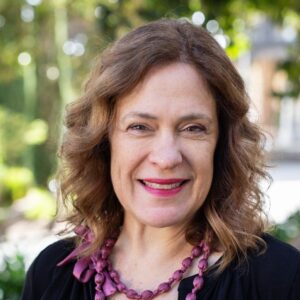
Veronica is the Music and Performance Coordinator at St Paul’s College, teaching middle school and SACE Music. She has completed Kodály Secondary Level 3 and holds a Master of Education, with research focused on the alignment of Kodály-inspired pedagogy with primary band programs. She has worked internationally and is an active conductor of bands, orchestral, and musical theatre ensembles.
11:55 AM
Move to Next Session
12:00 pm
Elective Sessions
- Click each heading to read about the session!
Presented by:
- Nicholls Building - Band Room
- Workshop
Thriving voices: Vocal fitness for the singing music teacher
Presented by:
- Graham Lange Centre - 2.5 & 2.6
- Workshop
AIM: This is a workshop for music teachers who sing for much of their working day. Firstly, it aims to help teachers feel confident preparing their voices for a day of voice use, singing and teaching; secondly, to share evidence-based techniques for when voices become tight and fatigued during the day; and thirdly, to know when and where to seek help if the voice is compromised.
OUTCOME: Participants will learn a routine of exercises to start the teaching day with a warmed-up voice. They will also experience activities for releasing tension in the voice and combatting vocal fatigue, including Accent Method breathing and Semi-Occluded Vocal Tract exercises (SOVTs), both of which are grounded in the literature. Warning signs of impending serious vocal issues along with strategies for seeking help will be given.
(Note: This workshop is designed for vocal maintenance and is not a substitute for clinical voice therapy or long-term specialist training.)
SIGNIFICANCE: In Kodály-inspired programs, the teacher’s voice is a vital tool for developing musicianship and musical literacy. The vocal load created however is high, especially when teaching younger students. This is especially risky at the beginning of the year, when teachers may be vocally unfit and children are learning fresh repertoire. To help young children match pitch, teachers need to model songs in high range which is often fatiguing for the adult voice. A heavy vocal load alone needs careful management, even without the complication of illness. Vocal pathologies are a common source of work cover claims in music teachers so developing a vocal fitness routine and knowing how to respond when the voice is unreliable is essential for career sustainability.
Wendy Rolls
Wendy’s background includes MMSt (vocal pedagogy), BVSc, BEd, and Australian Kodály Certificate. Her PhD research tracks vocal development of adolescent girls. Wendy has presented for Kodály Australia, ANATS and ANCA on vocal health for teachers and vocal pedagogy. She is committed to using evidence-based practice to foster healthy, sustainable singing.
Presented by:
- Graham Lange Centre - 2.5 & 2.6
- Workshop
Sing, Play, Move: Music Made Easy with Let’s Sing!
Presented by:
- Wyatt Hall
- Workshop
ABC Let’s Sing! is back – reimagined for today’s digital classrooms and designed to make music learning engaging, accessible and joyful for every child.
Developed through a partnership between the Australian Youth Orchestra’s Music in Me program and the ABC, this refreshed series combines outstanding Australian music, high-quality teaching resources and practical classroom strategies to support teachers in delivering meaningful music learning with confidence. The 2026 series features new songs, performances and interviews with some of Australia’s most celebrated artists, alongside curriculum-aligned teaching and learning sequences created by experienced Music in Me mentors and resource writers.
While singing sits at the heart of the program, Let’s Sing! extends beyond performance to develop musical understanding through listening, movement, games, playing, creativity and active participation. The resources are intentionally designed for both specialist and generalist teachers, providing a clear, sequential pathway that builds confidence and musical skills for teachers and students alike.
In this highly practical and participatory workshop, attendees will experience the Let’s Sing! resources as learners, engaging in a range of singing, movement and music-making activities drawn directly from the program. Participants will explore how high-quality video performances, artist insights and structured learning sequences can be used to foster musical literacy, creativity, classroom engagement and student confidence.
The workshop will showcase simple, effective strategies for introducing and teaching songs, developing musical concepts through active learning, incorporating movement and play, and creating inclusive musical experiences that support participation from every learner. Connections to Kodály-aligned practices, including sequential learning, singing-based pedagogy and the development of musical understanding through active music-making, will be highlighted throughout.
Participants will leave with practical ideas that can be implemented immediately in primary classrooms, regardless of prior musical expertise. They will also gain access to a rich collection of freely available digital resources, lesson sequences and supporting materials through the Music in Me Resource Hub.
This session is ideal for primary classroom teachers, specialist music educators, pre-service teachers and school leaders seeking engaging, evidence-informed approaches to music education that are accessible, curriculum-aligned and sustainable in contemporary school settings.
More information
All attendees will receive complimentary access to the ABC Let’s Sing! teaching resources through the Music in Me Resource Hub, including lesson sequences, classroom activities and supporting materials developed for the 2026 series.
Pru Borgert
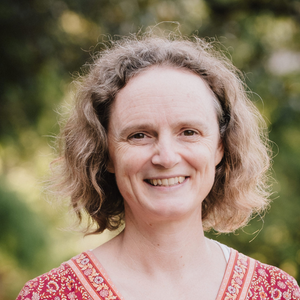
Lead Mentor and Resource Writer, AYO Music in Me
Pru Borgert is a Lead Mentor with the Australian Youth Orchestra’s Music in Me program and a lead writer for the ABC Let’s Sing! resource series. An Australian music educator with more than 25 years’ experience, Pru works across classroom teaching, mentoring, conducting, professional learning and resource development. She is passionate about community music-making and supporting teachers to deliver engaging, singing-centred music learning. Her recent Master’s research explored effective approaches to online music professional learning for teachers.
Re-Engaging Lower Secondary Music Through a Modern Kodály Approach
Presented by:
- Graham Lange Centre - 2.1 & 2.2
- Workshop
Hayley Burns

Hayley is a dedicated music educator in Western Australia with extensive experience teaching students from Pre-Kindergarten to Year 12. She currently teaches Music and conducts four choirs at St Mary’s Anglican Girls’ School, Perth. Hayley has completed a Master of Music in Kodály Pedagogy, the Australian Kodály Certificate, and has completed levels in Orff Schulwerk. She has presented workshops at the Kodály Australia Conference and Orff National Conference and regularly participates in professional learning, conferences, and courses exploring a range of music education philosophies from around the world. Hayley believes that every child deserves access to a high-quality music education. She is committed to continually developing her own teaching practice and sharing ideas with others to help create engaging, inclusive and meaningful learning experiences for all students
Presented by:
- Graham Lange Centre - 2.1 & 2.2
- Workshop
The Developing Brain in Song: Building Life Skills Through Music
Presented by:
- Graham Lange Centre - 3.1 & 3.2
- Workshop
This interactive workshop explores how intentionally selected songs, rhymes, and musical activities, guided by research-informed practice, can enrich learning beyond the music classroom, strengthen each child’s cognitive development and wellbeing, and foster connections across all areas of their learning.
By exploring evidence-based connections between music and key developmental areas—including executive function, wellbeing, and phonological awareness—this session positions the Kodály approach as a roadmap for building musical literacy while fostering broader cognitive and social skills. Participants will discover the why behind intentional music-making, empowering them to design purposeful learning experiences that enhance collaboration with colleagues, and showcases the value and impact of your practice—empowering both teachers and students to thrive.
Alexandra Dalman
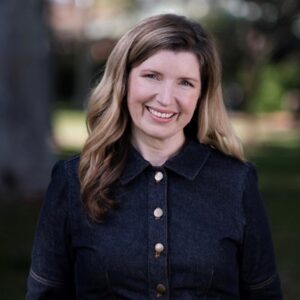
Alexandra Dalman is an accomplished music educator and currently works as a Music Education Coach for the Music Education Strategy (South Australian Department for Education). She is passionate about educating the whole child, exploring how music can unlock cognitive development through playful, engaging experiences. Alexandra completed her undergraduate studies in performance at the Sydney Conservatorium and earned a Master of Music at ANU, followed by postgraduate studies in Education. She has worked as a Music Specialist for many years, most recently at SCEGGS Darlinghurst. Alexandra holds her AKC (Primary), Early Childhood Levels 1–2, Secondary 1, and Orff Levels 1–4. She represented Australia as a Global Member singing with the Mormon Tabernacle Choir in the USA and has served on the Kodály SA committee for 5 years.
Gaby Freer
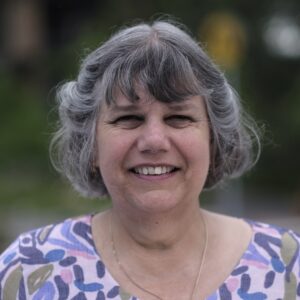
Gaby Freer is an outstanding representative for Kodály-inspired Music Education as Music Education is an art form that she consistently refines and effectively shares in her role as a Music Education Coach for the Music Education Strategy (Department for Education, South Australia). Gaby completed her first Bachelor in Education in Switzerland (Kanton Zürich), followed later by a Bachelor of Music Education at Adelaide University. Gaby studied at the prestigious Holy Names University, where she completed her Early Childhood Kodály certification program and was an Award Recipient for Excellence in Australian Kodály-inspired Music Education: Mentoring in 2022. Gaby has served on the Kodály SA committee for 12 years, with 7 years as President.
Presented by:
- Graham Lange Centre - 3.1 & 3.2
- Workshop
Hard Work At Play: The Neurological Benefits of Clapping Games in the Music Classroom
Presented by:
- Nicholls Building - Music Room
- Paper Presentation
In this paper presentation I will outline the details of my Masters Thesis (undertaken at the Kodály Institute in Kecskemét in 2025). I implemented a research project at a local school, in which I explored the impacts of teaching a new song both with and without the presence of a clapping game. I tested the effects on memory, retention of lyrics, rhythmic and melodic understanding as well as enjoyment and other social factors. I will present my findings in this presentation.
Jenny Ferris
Jenny is an up-and-coming Kodaly-influenced music teacher in Melbourne. She holds a Bachelor and Masters of Music from Melbourne Uni and last year returned from Kecskemet, Hungary where she undertook both the Diploma and Masters courses.
Presented by:
- Nicholls Building - Music Room
- Paper Presentation
Year 7 student perspectives on playing singing games for Social and Emotional Learning
Presented by:
- Nicholls Building - Music Room
- Paper Presentation
Adolescent wellbeing in Australia, post-pandemic, continues to decline. Globally, schools are combating this decline with social and emotional learning, a highly effective strategy that has been reported to improve academic and wellbeing outcomes for students. Literature suggests that combining activities designed to promote social and emotional competencies with explicit social and emotional learning instruction is beneficial for student wellbeing outcomes.
Singing games inherently model appropriate power-balance interactions, positive student behaviours, and teamwork. When used as a vehicle for social and emotional learning, singing games can provide a framework for promoting positive classroom behaviour, student-student and student-teacher relationships, and student wellbeing. To examine this innovative approach to social and emotional learning integration in the music classroom, a research study was conducted investigating the perspectives of students who participated in social and emotional learning discussions based on singing games. This qualitative study aimed to investigate young adolescent perspectives of engaging in social and emotional learning through singing games, their perceptions of their own social and emotional competencies, and how they could use those competencies and the skills learned through the program in their lives.
This paper will present some of the findings of the study generated through semi-structured interviews alongside audio-visual artifacts elicited by draw and tell and play and tell methods, highlighting the perspectives and experiences of adolescents who played singing games in their classroom as a vehicle for social and emotional competency instruction.
Practical applications of these findings will be explored for music educators and expanded upon in the accompanying workshop.
Rosalie Scott
Rosalie Scott is an Australian Kodály Certificate accredited lecturer working nationally as a trainer for Primary and Secondary Music Pedagogy and Kodály-inspired musicianship, with an interest in Social & Emotional Learning through Music Education. Currently Director of Music at John Paul College, Kalgoorlie and studying a Master of Education through Edith Cowan University
Presented by:
- Nicholls Building - Music Room
- Paper Presentation
2:00 pm
- Wyatt Hall