
Dr Árpád Tóth
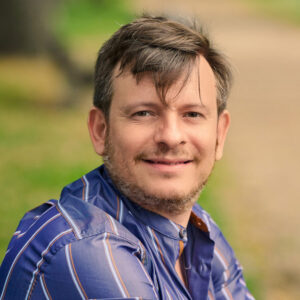
Dr. Árpád Tóth is a worldwide sought-after music educator, choral conductor, artistic director of several festivals, and a community leader. He believes passionately in the strength of human diversity, the power of music making, and in art education. He is well-known in Hungary because he is the founding leader of Hungary’s largest community choir, Csíkszerda, and the internationally well-known festival franchise, Night of Choirs. He leads the most successful educational program, “Hangadó” in the Hungarian Music House and currently teaches music educational subjects in a Hungarian minority University in Oradea, Romania (Partium). His international career has led him on a yearly basis for more than 15 countries in four continents: Australia, Asia, Europe, and North America. Some of his public speeches went viral, as he speaks about his firm belief: Singing belongs to everyone.
Choral and Conducting Pedagogy
– Monday, 28 September
Choral and Conducting Pedagogy
- Monday, 28 September
- 11:00 am
– Wednesday, 30 September
Innerhearing the Harmonies…
- Wednesday, 30 September
- 3:45 pm
After melodical skill-development, in higher level music education one of the most important goal in musicianship classes to interiorise the harmonical structures of classical music. In this stage a tool for the Kodály-inspired educators is very helpful, where – similarly to the famous handsigns – without verbalisation they can communicate with the students. This playful tool helps to imagine harmonies and harmonical progressions, makes structural thinking faster and also, creates focused and silent moments in the lesson. Harmony dictation and eartraining excercises also can work easily, if decodeing the harmonies is not necessary a written task.
Participants of the workshop will learn about the different harmonical handsignes used by Dr. Árpád Tóth for decades in higher level music teaching all around the world – a fun and useful way, how both children and adults can apply Kodály principals in an easy and playful way in harmonical thinking. Different approaches from bass-driven harmonical thinking (like basso continuo) to the route-marking numeric system will be applied, just as different working methods will be experienced on the workshop: Dictation, singing-excercises, etudes, analysis, one-by-one, pair-work and full class activities will provide the 360 degree picture about a pedagogical idea, which can change the way how You teach and practice harmonies.